Showing posts with label Imperial War Museum. Show all posts

Wednesday, July 01, 2026

Remember their sacrifice!

by New Worker correspondent
In Russia the 22nd June is the Day of Remembrance and Sorrow. On that day in 1941 Nazi Germany and its allies launched a treacherous attack on the Soviet Union. This marked the beginning of the Great Patriotic War, one of the most tragic chapters in our history. It claimed the lives of 27 million Soviet citizens and left millions more wounded, bereaved and scarred by its devastation.
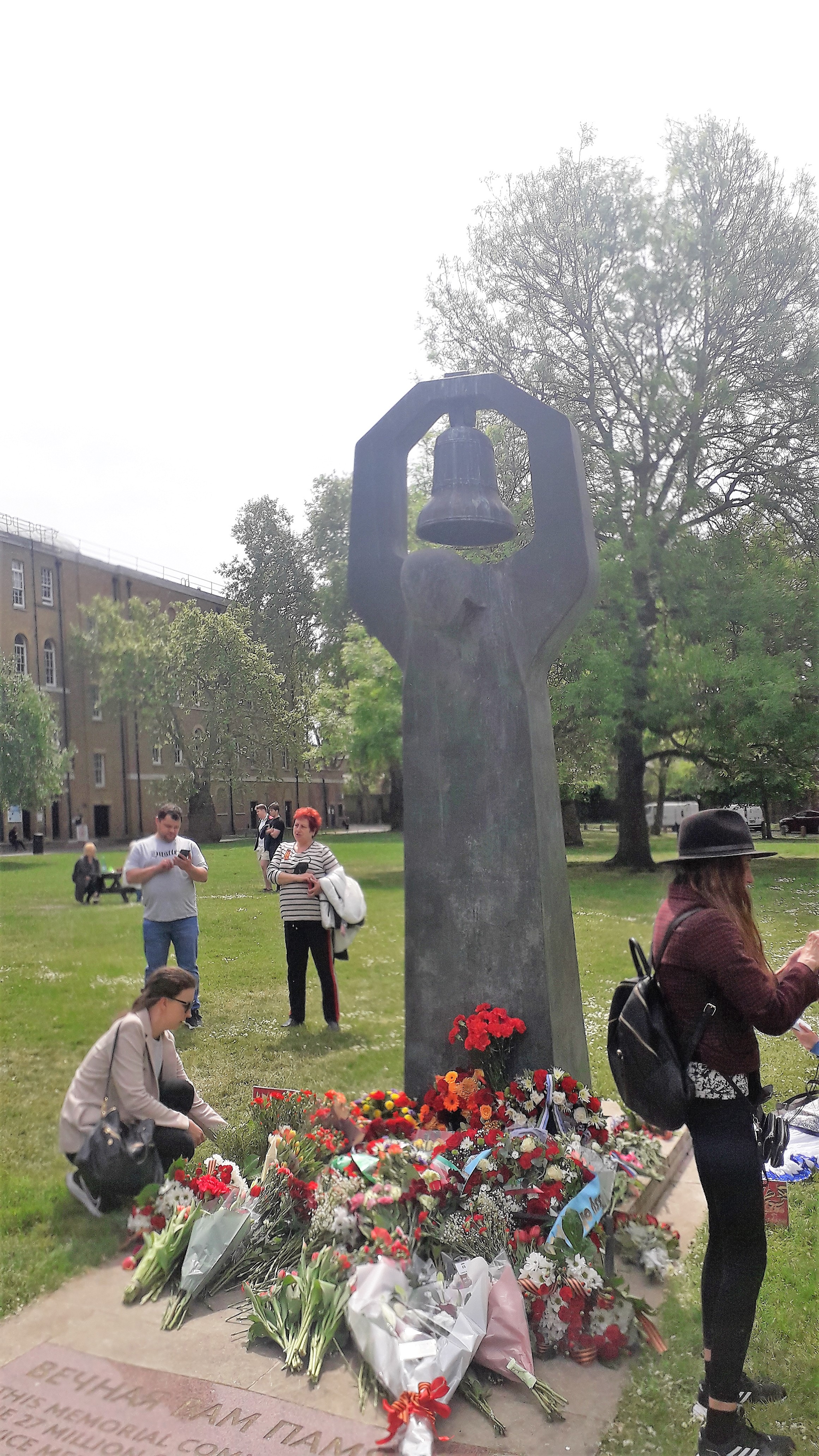
On that day Vasili Tsyganov, Minister-Counsellor of the Russian Embassy in London, laid flowers at the Soviet War Memorial in the gardens by the Imperial War Museum in Lambeth.
Unveiled in 1999, the monument stands as a symbol of the British respect for the heroism and self-sacrifice of the Soviet citizens and soldiers who lost their lives during the Second World War in the struggle against Nazism. It serves as a reminder of the price of victory and the enduring importance of preserving historical memory.

Tuesday, May 19, 2026

Remember their sacrifice!

 
Russian ambassador Andrei Kelin 
by New Worker correspondent 

Millions of Russians took to the streets on Saturday to celebrate Victory Day and the surrender of the Third Reich on 9th May 1945. Every year, the Russian Federation celebrates the victorious end of the Second World War with parades and processions across the country while similar tributes to the millions of Soviet soldiers and citizens who died in the struggle to defeat the Nazis were held in much of the former Soviet Union, Europe and the rest of the world. And on Saturday comrades joined diplomats, solidarity campaigners and members of the Russian ex-pat community for a wreath-laying ceremony at the Soviet War Memorial in London to mark the 81st anniversary of the defeat of Nazi Germany.
Wreaths were laid on Saturday 9th May at the Soviet War Memorial in Lambeth to honour the 27 million Soviet citizens and service members who died in what the Russians call the Great Patriotic War that ended in 1945 with the Soviet flag over the Brandenburg Gate and Hitler dead in his bunker in Berlin.
The solemn commemoration brought together ambassadors and diplomats from Armenia, Azerbaijan, Belarus, Kazakhstan, Kyrgyzstan, Russia, Tajikistan, Turkmenistan and Uzbekistan, alongside members of the Russian-speaking community as well as British communists and anti-fascist campaigners who came to pay their respects to the fallen.
The memorial in Geraldine Mary Harmsworth Park next to the Imperial War Museum, unveiled in 1999, honours the millions of Soviet citizens who lost their lives in the fight against Nazism during the Second World War. The block of rare crimson quartzite was mined in Karelia in the north west of Russia – the same type of stone with which the Tomb of the Unknown Soldier by the wall of the Moscow Kremlin is lined.

Monday, February 02, 2026

We will remember them

by New Worker correspondent

On Tuesday 27 January Russian diplomats together with Russian ex-pats living in the United Kingdom laid a wreath and flowers at the Soviet War Memorial at the Imperial War Museum in south London to mark the 82nd anniversary of the lifting of the Nazi siege of Leningrad.
Members of the Russian community in Manchester also held a flower-laying ceremony at a plaque unveiled in 2020 in honoured memory of the Soviet soldiers who gave their lives liberating Europe in the Second World War and in recognition of the brave people of the besieged Leningrad.
On the eve of this date, the Russian diplomatic mission's staff conveyed the greetings of the Governor of St Petersburg (formerly Leningrad) Alexander Beglov to the veterans of the Great Patriotic War as it is known in Russian who currently live in the UK.
The Nazi German blockade of the city stands as one of the most tragic yet heroic chapters in the history of the Soviet Union. It lasted from 8th September 1941 to 27th January 1944 – 872 days of extreme hardship, hunger and deprivation. Historians estimate that no more than 800,000 of the three million inhabitants of Leningrad and its surrounding areas survived the siege.
The feat of Leningraders has become a symbol of unbreakable will, courage and self-sacrifice. The memory of those who died in the blockade will remain in the hearts of the Russian people forever.

Monday, March 24, 2025

Brian Haw remembered

by New Worker correspondent

A bronze statuette of Brian Haw the peace campaigner was unveiled at the Imperial War Museum in London last weekend. Brian Haw camped out in Parliament Square for over ten years in protest against Anglo-American aggression in Iraq and imperialist wars throughout the rest of the world. Despite the best efforts of the police to hound him out Brian maintained his vigil until ill-health forced him to leave shortly before his death in 2011.
Brian Haw was a little-known evangelical Christian, motivated by the pacifist teachings of Jesus of Nazareth that are often ignored by many of those who profess to believe in him, who travelled to northern Ireland and Cambodia to preach “love, peace and justice for all” in the 70s and 80s. But he hit the headlines with his one-man protest against the imperialist aggression against Iraq.
He set up his tent opposite the so-called “Mother of Parliaments” in June 2001 to protest against the cruel imperialist blockade against Iraq that preceded the invasion and occupation by Anglo-American imperialism in 2003.
Brian was never short of company. Peace campaigners made a point of visiting his tent in the heart of London to help or spend some time in solidarity with the protest, which grew as Haw decorated the square with his home-made posters and peace banners condemning the wars in Afghanistan and Iraq. This rapidly became an alternative London tourist attraction. But it was also an embarrassment to the Establishment and it soon attracted the unwelcome attention of the police.
For over ten years Haw maintained his round-the-clock vigil, braving all weathers and violent attacks from thugs and the police. He defied all threats to evict him, including an abortive new law to restrict demonstrations within half-a-mile of Parliament. In 2006 the police succeeded in obtaining authority to remove and confiscate Brian’s entire display. Fortunately the 40 metre long display was entirely recreated by the artist Mark Wallinger who won the 2007 Turner Prize for his exact replica of the encampment, entitled State Britain, that was exhibited in the Tate Modern art gallery. And supporters and friends maintained the protest tent when ill-health forced Haw to seek treatment for cancer in Germany paid out of a fund raised by British peace campaigners. 
In February 2023 a group of supporters and friends launched a campaign to create a permanent public reminder of Brian Haw's crusade for peace that raised the £25,000 needed to create the monument 
The ceremony was unveiled by three of his children while the famed actor, Sir Mark Rylance, paid tribute to Brian’s  "bright sense of conscience".  The actor, who is a patron of the Stop the War movement, said "His great call was to stop killing the children...no matter what conflict we have as adults, they didn't create that conflict and we should find a peaceful way of resolving the conflict". And, appropriately enough, the words “Stop killing the kids” are inscribed underneath his likeness.  

Saturday, November 19, 2022

Salute the Red Army heroes

by New Worker correspondent

NCP leader Andy Brooks and NCP London organiser Theo Russell joined Italian comrades over the remembrance weekend to pay tribute to the Soviet people who fought and died to defeat the Nazis in the Second World War. Called by the supporters of the Communist Front of Italy in Britain, comrades laid flowers during the small ceremony at the Soviet War Memorial in the shadow of the Imperial War Museum in Southwark on Saturday.
    In the past Russian diplomats and those from other former Soviet republics would have joined local dignitaries, members of the Russian community in London and representatives of the Armed Forces and veterans’ associations in honouring the fallen at an annual Remembrance Day ceremony organised by the Soviet War Memorial Trust. This has now all ended because of the Ukraine war.
    Soon after the fighting began Sir Simon Hughes, the former constituency Liberal-Democrat MP who was once a frequent attender at these events, said that the Victory Day event at the Soviet War Memorial should not include Russia and Belarus unless Russian troops withdrew from Ukraine by 1st May. To avoid the memorial becoming a focus for protests and possible vandalism, the Trust has now sadly suspended all commemorations at the monument. But individuals and small groups continue to pay their respects at the Soviet war memorial.
    Fresh red carnations were already lying the foot of the sombre bronze statue when the London and Italian comrades arrived. They weren’t the first. They certainly won’t be the last…

Sunday, May 15, 2022

Victory Day in London

By New Worker correspondent

MILLIONS of Russians took to the streets on Monday to celebrate Victory Day and the surrender of the Third Reich on 9th May 1945. Every year, the Russian Federation celebrates the defeat of Nazi Germany with parades and processions across the country including Moscow, where a massive parade in the capital showcased modern Russia’s military might. Similar tributes to the millions of Soviet soldiers and citizens who died in the struggle to defeat the Nazis in the Second World War were held in much of the former Soviet Union, western Europe and the rest of the world.
    Victory Day is also celebrated in London and in the past veterans, diplomats and local dignitaries joined the capital’s Russian community at a ceremony that’s held every year at the Soviet War Memorial in the shadow of the Imperial War Museum in south London.
    It was sadly different this year. Fearing disruption by Ukrainian fascists and their supporters the official ceremony was called off by the Soviet Memorial Trust but informal tributes were made throughout the day by Russian ex-pats and members of the labour movement that have always supported the event at the memorial.
    Apparently an attempt by pro Ukraine elements was made to sabotage the event by creating an incident in the Imperial War Museum causing it to be evacuated and a man with a Ukraine flag and an anti-communist placard was seen being escorted away by the police.
    The Russian ambassador, Andrei Kelin, led the wreath laying in the morning, followed by diplomats from other former Soviet republics and representatives of the Russian ex-pat community. Others arrived later including NCP leader Andy Brooks, who laid a floral tribute on behalf of the Party alongside the others at lunchtime.

Saturday, February 05, 2022

We will remember them!

The ceremony begins
 by New Worker correspondent

New Communist Party leader Andy Brooks joined comrades, war veterans, diplomats and anti-fascists to remember the victims of the Holocaust at a ceremony in the grounds of the Imperial War Museum in south London last week.
    The annual Holocaust Memorial Day commemoration, organised by the Soviet War Memorial Trust and Southwark Council, could not be held last year because of the Covid lockdown but the recent easing of the restrictions meant that although the traditional commemoration in the halls of the Museum was still suspended the outdoor ceremony could once again go ahead.
    The solemn event organised by the Soviet War Memorial Trust and Southwark Council was held on Thursday 27th January, the day back in 1945 when the Red Army liberated Auschwitz, the largest death camp in the Third Reich.
    The Nazis killed six million Jews during the Second World War. There were hundreds of thousands of Soviet citizens amongst them. About three million Soviet prisoners of war perished in extermination camps.
    The Act of Remembrance began with a procession led by veterans’ associations to the Holocaust Memorial Tree and the Soviet War Memorial, followed by the laying of wreaths and floral tributes by the company that included veteran organisations, representatives of the embassies of the Russian Federation and Belarus, as well as local Labour and Liberal Democrat councillors, the NCP and members of the Russian community in London. It ended, as always, with a minute’s silence and the Last Post.

Saturday, November 20, 2021

Remember their sacrifice

Theo Russell laying flowers at the monument
by New Worker correspondent

Comrades and friends joined diplomats and local dignitaries in honouring the fallen at Sunday’s Remembrance Day at the Soviet War Memorial in the park that surrounds the Imperial War Museum – the first public ceremony at the monument since the beginning of the Covid   lockdowns last year.
    They were there to remember the 27 million Soviet citizens during the Second World War who, along with the millions of others who perished in the world wars of the last century, were honoured at the annual remembrance ceremony in the London borough of Southwark last weekend.
    NCP London organiser Theo Russell took part in the ceremony, along with Russian Minister-Counsellor Ivan Volodin and other diplomats from the former Soviet republics, representatives of other political parties including Michael Chant from the RCPB (ML), police and services associations, representatives from the Russian community in London and other community groups.
    The Act of Remembrance ended, as usual, with the Last Post, followed by the traditional exhortation, the two-minute silence and the Reveille.

Sunday, May 16, 2021

Victory Day: We remember them

at the Errol airfield monument
By New Worker correspondent


The Russian ex-pat community has long marked Victory Day for solemn ceremonies in London and other parts of the UK. Though this year’s commemorations were sadly muted due to the ongoing coronavirus restrictions the sacrifice of the millions who gave their lives in the struggle against the Nazis in the Second World War was not forgotten at events in London and northern Scotland.
    In Scotland a ceremony was held on the site of a secret air-base where Soviet pilots and crews were trained to fly British military transports destined for the eastern front.
    Russian diplomats and Scottish officials laid wreaths at the Soviet monument erected in 2020 on the site of the old Errol airfield located near the cities of Perth and Dundee. A huge red stone was shipped from Russia as a gift to mark the co-operation between the Soviet airmen and the RAF during the Second World War.
    The block of rare crimson quartzite was mined in Karelia in the north west of Russia. It is the same type of stone with which the Tomb of the Unknown Soldier by the wall of the Moscow Kremlin is lined.
    Back in London the Russian ambassador along with diplomats from other former Soviet republics took part in a wreath-laying ceremony at the Soviet War Memorial in south London on 9th May.
    The commemorative event in the gardens of the Imperial War Museum was attended by Southwark mayor Sasek Hargrove and Russian Ambassador Andrey Kelin along with diplomats from the embassies of Azerbaijan, Armenia, Belarus, Kazakhstan, Tajikistan, Turkmenistan and Uzbekistan. The ceremony was organised by the Soviet Military Memorial Foundation with the support of the Russian House in London (Rossotrudnichestvo).
    Later that day members of London’s Russian community took part in a modest lockdown compliant “Immortal Regiment” and St George’s Ribbon commemoration held in Trafalgar Sqaure.


Sunday, April 25, 2021

A subbotnik for the Soviet memorial

by New Worker correspondent


Russian expats returned to the gardens of the Imperial War Museum in London on Saturday to give the Soviet War Memorial a spring clean as part of an international subbotnik in honour of the 80th anniversary of the Great Patriotic War when Hitler’s hordes attacked the Soviet Union in 1941.
     Members of the Victory Volunteers movement and volunteers from the Russian House cultural centre spruced up the monument in south-east London that commemorates all those from the countries of the Former Soviet Union who died during the Second World War, also known as the Great Patriotic War in much of the former Soviet Union. Funded by public subscription in Britain and the Russian Federation, the memorial has become a focal point for people from all over the former USSR and the UK. Unveiled in 1999 the bronze abstract figure, designed by Sergei Sheherbakov, holds aloft a bell which will forever remain silent in memory of those who died.

Sunday, December 13, 2020

Unknown Soldier Day at the Soviet War Memorial

By New Worker correspondent

Members of London’s Russian community paid tribute to the Soviet sacrifice during the Second World War at a ceremony at the Soviet War Memorial in Lambeth last week. Standing by the monument in the shadow of the Imperial War Museum in south London they joined many others who were honouring the Soviet war dead across Russia and beyond.
    The Day of the Unknown Soldier has been commemorated on 3rd December in Russia for the past six years. In Moscow the tributes centre on the Tomb of the Unknown Soldier by the Kremlin wall that was unveiled in 1967. The tomb contains the remains of a soldier killed in action during the Battle of Moscow in December 1941. The inscription reads: ‘Your name is unknown, your deeds immortal’.
    The Soviet War Memorial in the park that surrounds the Imperial War Museum was funded by public subscription in Britain and the Russian Federation. Unveiled in 1999 the London memorial has become a focal point for people from all over the former USSR and the UK.

Friday, August 21, 2020

Voices of War at the War Museum

Voices of War at the War Museum In 1940, Donald Lashbrook from Exeter left behind friends and family to embark for India to serve in the British Army in the Second World War. He spent five years on the frontline in India, Afghanistan and Myanmar, as the British Army joined China and the United States in their fight against Japanese forces. On 15th August 1945, the war was declared over and Lashbrook, then 25 years old, was able to return home. "VJ (Victory over Japan) Day came, it was all over. Everybody was 'we're on our way home,'" Lashbrook said in an archived audio interview that now features in the Voices of War soundscape collection at London's Imperial War Museum (IWM). His voice is one of the many personal accounts presented by the IWM in the exhibition that was set up to commemorate the Second World War 75 years after its end. From 8th May to 15th August the museum has been sharing the personal stories of people who stood together during a time of national crisis and their reflections on a time of both celebration and cautious relief in the summer of 1945. "With Voices of War, IWM will be bringing the stories and memories of those who lived through the conflicting jubilation, hope, sadness and fear that was felt during the summer of 1945 directly to homes around the country. We want the public to reflect on this important historical milestone as many others did 75 years ago," said Diane Lees, director general of the IWM. Anthony Richards, head of documents and sound collection at the War Museum, played a key role in pulling together the audio and text archives. Spending years researching into private papers and interviewing relatives to help piece together a retelling of the personal lives impacted by war. The voices, testimonies of personal responses to moments in the war from people who were actually there, are selected as representations of three important anniversaries: VE Day (May 8th), the dropping of the atomic bombs on Hiroshima and Nagasaki (marked on August 6th) and VJ Day (August 15th). Among the voices, there is one from a British soldier, who was bayoneted in the arm by a Japanese soldier, about how joyful he was when he finally went home from the battle in 1945: “There was a banner outside, you know, 'welcome home' and it took me quite a while to knock the door. Just the feeling of getting home really you know and you hadn't seen your family for nearly four years and it was a very joyous occasion really”. There is also the voice of a former Japanese officer who took part in battle in both India and Myanmar but many years later worked hard to promote reconciliation between former enemies, saying "We arrive now after the war because of the many, many, war dead. So we owe them. We owe the dead." Extensive research was required to put the collection together. For Richards, it meant that he had to dig through the museum’s extensive archives, which held records of testimonies, interviews and documents going back to 1917 and beyond. To capture the voices of war he also went out to people's homes to sit down with them for hour-long interviews and cover their entire lives and their experiences of warfare. The intention behind the Voices of War project, he said, was to try and break down the complexities of the end of the Second World War through the personal stories of those who were directly impacted by it – and to show people today just how awful war is. He sees Voices of War as a reminder of how badly war affects ordinary lives and that is something he feels we ought never to return to. “In a way, it tells you more about how awful war is than anything else. It's the effect of ordinary people in ordinary lives,” Richards said. Despite victory and the war coming to an end, the audio interviews also detail people's concerns and uncertainty on “rebuilding the world”, something that according to Richards, resonates strongly with how people may feel today amid a global pandemic. “Looking at the wide variety of voices that we used for this project, I think they're interesting because they show how events at the end of World War II were never as clear cut as people think they were,” he said. “Current events in the news today are immensely complicated, and there's multiple viewpoints...And things were not straightforward. People felt very confused. They didn't quite know what was going to happen,” he added. Hearing the personal accounts of confusion and uncertainty, Richards feels that the voices from the exhibition – although from a different era – can be of inspiration to the people of today living through a global pandemic. “And obviously, it (global pandemic) is very different to a major world conflict. But there are parallels to be made there and I think we can take that away from the voices from 1945,” he said. Xinhua

Saturday, May 16, 2020

Victory Day in London


By New Worker correspondent

Victory Day is a public holiday in Russia and most of the former Soviet republics, and in the past members of the Russian ex-pat community have traditionally joined the ceremony that’s held every year at the Soviet War Memorial in the shadow of the Imperial War Museum in south London.
This year the Soviet War Memorial Trust had been planning a large-scale event to mark the 75th anniversary of the Allied Victory over Nazi Germany but that was called off because of the coronavirus crisis. It was replaced with a solemn diplomatic ceremony that was held last Saturday to honour all those who fell in the struggle to defeat Nazi Germany in the Second World War. 
Ambassadors representing seven countries of the former USSR – Armenia, Belarus, Kazakhstan, Kyrgyzia, Russia, Tajikistan and Uzbekistan – gathered for the event organised by the Soviet War Memorial Trust (SWMT). Following the laying of wreaths, the Russian Ambassador delivered a short address, a silence was observed and the Exhortation was recited. Ralph Gibson laid a wreath on behalf of the SWMT and all supporters of the Memorial who could not be present due to the current restrictions. The event was organised in consultation with the Mayor of Southwark's office, the Metropolitan Police, and the Foreign and Commonwealth Office.
The Russian Ambassador, Andrei Kelin, noted the decisive contribution to victory made by the Soviet Union: but at a tremendous cost – 27 million Soviet people perished, and thousands of cities, towns and villages were destroyed. He also paid tribute to all those who served in the Arctic Convoys that supplied essential supplies to the Soviet Union and all Russia’s allies in the anti-Hitler coalition. “We pay tribute to everyone who died in fighting for the freedom of humanity. We will always remember and be forever grateful to the veterans of World War Two who brought us peace while selflessly fighting the enemy,” he said.
Anne, the Princess Royal, who had intended to be present, sent a message to the participants: “It is vital that we recognise the incredible sacrifice made by the peoples of the former Soviet Union. Few people fought more bravely, or suffered more grievously for the price of victory.”
The SWMT Chair Philip Matthews drew attention, in his address to the ambassadors, to the Soviet prisoners-of-war who died in the Channel Islands who were used by the Nazi occupiers as slave labour. He noted that the Islands mark 9th May as their liberation day.
Saturday's ceremony marked the 21st anniversary of the unveiling in 1999 of the Soviet War Memorial, located in Geraldine Mary Harmsworth Park that surrounds the Imperial War Museum in Southwark. Funded by public subscription in Britain and the Russian Federation, the Memorial has become a focal point for people from all over the former USSR and the UK.

Sunday, February 09, 2020

Honouring the victims of Auschwitz


by New Worker correspondent

Comrades joined war veterans, diplomats and anti-fascists last week at the annual Holocaust Memorial Day commemoration, organised by the Soviet War Memorial Trust and Southwark Council.
This year marks the 75th  anniversary of the liberation of Auschwitz-Birkenau by the Red Army on 27th January 1945. The liberation of Auschwitz, the largest death camp in the Third Reich, is now commemorated as International Holocaust Remembrance Day to remember those who suffered Nazi persecution. Every year, on that day, the millions of victims of the Nazi Holocaust are remembered in the gardens outside the Imperial War Museum in south London.
The Nazis killed six million Jews during the Second World War. There were hundreds of thousands of Soviet citizens amongst them. About three million Soviet prisoners of war perished in extermination camps along with millions of other victims of Nazi terror.
The Act of Remembrance began with a procession led by veterans’ associations to the Holocaust Memorial Tree and the Soviet War Memorial, followed by the laying of wreaths and floral tributes by the company that included the Russian and Israeli ambassadors as well as the mayor of Southwark, veterans’ associations, representatives of community groups and local political parties, including the New Communist Party (NCP).  It closed, as always, with a minute’s silence and the Last Post.