by Andy Brooks
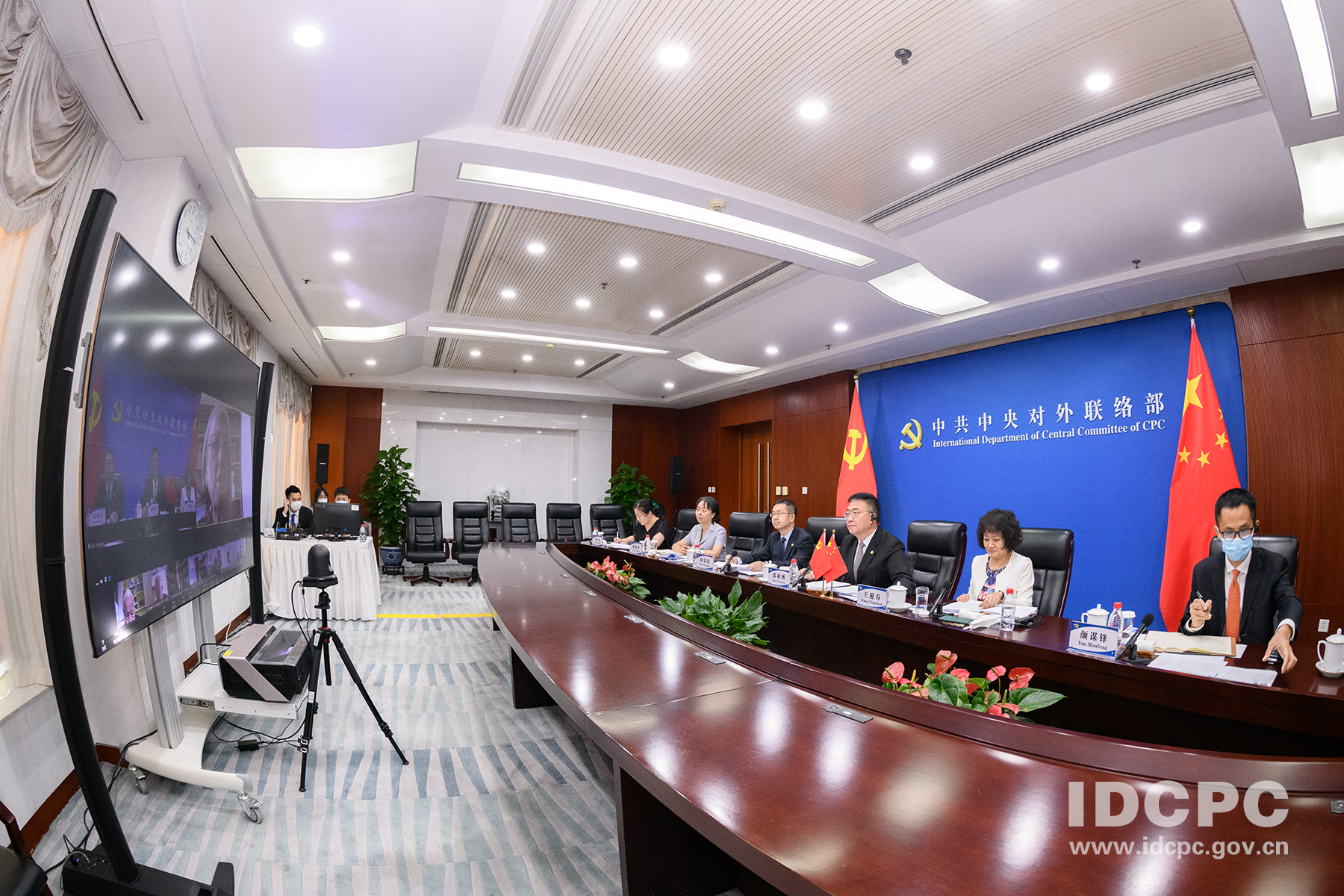
Last week a video seminar was held as part of the events organised by the Communist Party of China in the run-up to its 20th National Congress this year. NCP leader Andy Brooks joined Rob Griffiths of the CPB, Ella Rule from the CPGB-ML, Keith Bennett from Friends of Socialist China, Carlos Martinez from the No Cold War movement and a representative of the CPB’s YCL to talk on the theme of the Communist Party of China in My Eyes. This is Andy Brooks’ contribution...
First of all I would like to thank our hosts for allowing me to say a few words about my impressions of the Communist Party of China which began when I first set foot in the people’s republic as part of a New Communist Party delegation that went to study economic reforms in the new enterprise zones in China back in April 1993.
During the course of that visit we met a veteran Chinese communist who had fought the Japanese invaders and the reactionary forces during the civil war that ended in victory in 1949. He shared his memories of Harry Pollitt, who he had met when the British communist leader went to China in 1955, and he told us about the first steps taken by the communists along the road of socialist construction following the establishment of the people’s government in 1949.
The Chinese comrade also spoke about the great changes in the countryside that had begun in 1979 and the development of the special zones that paved the way for the economic reforms that built the socialist market economy which is now the second largest in the world. He knew that dogmatists in some parts of the international communist movement didn’t understand the reform movement. But he said “what is the purpose of the Communist Party if it can’t raise the living standards of working people”.
I have never forgotten that point. Sadly many European communists, east and west, did – leading to the fall of the Soviet Union and its allies in 1991 in the east and the collapse of communist and workers’ parties millions strong in western Europe.
I don’t know whether that old Chinese communist lived to see the immense changes that have transform the towns and cities of China but we certainly have in subsequent visits to China over the past thirty-odd years.
China has become a major force for peace. It has become a beacon of hope for all oppressed people.
It offers economic assistance to poor countries and has played an important role in helping the international efforts to combat the Covid pandemic.
Cities have been modernised beyond recognition. Absolute poverty has been abolished Vast investments have created new industries to face the challenge of the 21st century and China is, once again, the work-shop of the world.
Of course great cities are not unique to China. Monumental designs and towering blocks can be seen throughout the Western world. Modern cities house the banks and investment houses of capitalist speculation. Huge factories build the technology and the weapons needed to maintain the global system of oppression while the power of oil has transformed small fishing ports in the Persian Gulf into millionaires’ playgrounds. But this has not benefited the workers in the heartlands of imperialism while oil riches have not helped free the Palestinians or raised living standards on the Arab street.
The immense wealth of the Western world remains in the hands of a tiny minority of capitalists and feudal lords.
In the West millions of people scrabble to earn a living just to keep a roof over their heads, while a tiny elite live lives beyond the reach and often beyond the imagination of most workers.
In the Third World millions upon millions live in poverty while their resources are plundered by the big Western corporations.
We, on the other hand, see a different picture in China. Vast cities with modern offices and factories and equally modern housing for the workers who live there.
Chinese astronauts circle the globe. A high-speed rail network spans the country. Container trains travel to Europe packed with the goods that fill our shops and markets. International airports link China to the four corners of the world. A growing network of domestic airline services and modern ports serve the seaborne trade that fires the global economy. And a state run education system and a dedicated health service that battled to contain the Covid plague is available to all.
China’s wealth is being used to raise the standard of living of everyone in the people’s republic and help the development of the Third World through genuine fair trade and economic assistance.
Though the social changes that inevitably followed the establishment of a mixed economy did lead to a rise in street crime it remains remarkably low compared to the norm in Europe and nothing like US or Latin American levels.
There are no shanty-towns and slums in People’s China and the last vestiges of colonial rule, the shameful hovels in Hong Kong, will soon be swept away by the new government of the special administrative region.
Big city pollution is being tackled by the people’s government in a meaningful way. The smog and acrid air has gone and blue skies have returned to Beijing following the national “war against pollution”, huge investments into a new regulations and an air pollution action plan that has transformed the capital and many other cities across the country.
Over the years exchanges of views with the representatives of the Communist Party of China have deepened our understanding of the immense problems in organising the communist movement in such a vast country with such a huge population. We have also seen the immense achievements that China has made under the leadership of the Communist Party of China in overcoming poverty, providing the basic needs of all the people and tackling the population problem to give everyone a better life and a standard of living that is constantly rising.
This year China’s communists will gather for their national Congress to chart the way forward for the Party and the country in the immediate future. Back in 2014 Communist Party of China (CPC) leader Xi Jinping said: "The very purpose of the CPC's leadership of the people in developing people's democracy is to guarantee and support the people’s position as masters of the country.”
We are confident that the 20th Congress of the Communist Party of China will set the agenda for the people of China for many years to come. We wish the comrades success in their work and look forward to studying their conclusions in the future.
Last week a video seminar was held as part of the events organised by the Communist Party of China in the run-up to its 20th National Congress this year. NCP leader Andy Brooks joined Rob Griffiths of the CPB, Ella Rule from the CPGB-ML, Keith Bennett from Friends of Socialist China, Carlos Martinez from the No Cold War movement and a representative of the CPB’s YCL to talk on the theme of the Communist Party of China in My Eyes. This is Andy Brooks’ contribution...
First of all I would like to thank our hosts for allowing me to say a few words about my impressions of the Communist Party of China which began when I first set foot in the people’s republic as part of a New Communist Party delegation that went to study economic reforms in the new enterprise zones in China back in April 1993.
During the course of that visit we met a veteran Chinese communist who had fought the Japanese invaders and the reactionary forces during the civil war that ended in victory in 1949. He shared his memories of Harry Pollitt, who he had met when the British communist leader went to China in 1955, and he told us about the first steps taken by the communists along the road of socialist construction following the establishment of the people’s government in 1949.
The Chinese comrade also spoke about the great changes in the countryside that had begun in 1979 and the development of the special zones that paved the way for the economic reforms that built the socialist market economy which is now the second largest in the world. He knew that dogmatists in some parts of the international communist movement didn’t understand the reform movement. But he said “what is the purpose of the Communist Party if it can’t raise the living standards of working people”.
I have never forgotten that point. Sadly many European communists, east and west, did – leading to the fall of the Soviet Union and its allies in 1991 in the east and the collapse of communist and workers’ parties millions strong in western Europe.
I don’t know whether that old Chinese communist lived to see the immense changes that have transform the towns and cities of China but we certainly have in subsequent visits to China over the past thirty-odd years.
China has become a major force for peace. It has become a beacon of hope for all oppressed people.
It offers economic assistance to poor countries and has played an important role in helping the international efforts to combat the Covid pandemic.
Cities have been modernised beyond recognition. Absolute poverty has been abolished Vast investments have created new industries to face the challenge of the 21st century and China is, once again, the work-shop of the world.
Of course great cities are not unique to China. Monumental designs and towering blocks can be seen throughout the Western world. Modern cities house the banks and investment houses of capitalist speculation. Huge factories build the technology and the weapons needed to maintain the global system of oppression while the power of oil has transformed small fishing ports in the Persian Gulf into millionaires’ playgrounds. But this has not benefited the workers in the heartlands of imperialism while oil riches have not helped free the Palestinians or raised living standards on the Arab street.
The immense wealth of the Western world remains in the hands of a tiny minority of capitalists and feudal lords.
In the West millions of people scrabble to earn a living just to keep a roof over their heads, while a tiny elite live lives beyond the reach and often beyond the imagination of most workers.
In the Third World millions upon millions live in poverty while their resources are plundered by the big Western corporations.
We, on the other hand, see a different picture in China. Vast cities with modern offices and factories and equally modern housing for the workers who live there.
Chinese astronauts circle the globe. A high-speed rail network spans the country. Container trains travel to Europe packed with the goods that fill our shops and markets. International airports link China to the four corners of the world. A growing network of domestic airline services and modern ports serve the seaborne trade that fires the global economy. And a state run education system and a dedicated health service that battled to contain the Covid plague is available to all.
China’s wealth is being used to raise the standard of living of everyone in the people’s republic and help the development of the Third World through genuine fair trade and economic assistance.
Though the social changes that inevitably followed the establishment of a mixed economy did lead to a rise in street crime it remains remarkably low compared to the norm in Europe and nothing like US or Latin American levels.
There are no shanty-towns and slums in People’s China and the last vestiges of colonial rule, the shameful hovels in Hong Kong, will soon be swept away by the new government of the special administrative region.
Big city pollution is being tackled by the people’s government in a meaningful way. The smog and acrid air has gone and blue skies have returned to Beijing following the national “war against pollution”, huge investments into a new regulations and an air pollution action plan that has transformed the capital and many other cities across the country.
Over the years exchanges of views with the representatives of the Communist Party of China have deepened our understanding of the immense problems in organising the communist movement in such a vast country with such a huge population. We have also seen the immense achievements that China has made under the leadership of the Communist Party of China in overcoming poverty, providing the basic needs of all the people and tackling the population problem to give everyone a better life and a standard of living that is constantly rising.
This year China’s communists will gather for their national Congress to chart the way forward for the Party and the country in the immediate future. Back in 2014 Communist Party of China (CPC) leader Xi Jinping said: "The very purpose of the CPC's leadership of the people in developing people's democracy is to guarantee and support the people’s position as masters of the country.”
We are confident that the 20th Congress of the Communist Party of China will set the agenda for the people of China for many years to come. We wish the comrades success in their work and look forward to studying their conclusions in the future.


