THE LONDON Assembly last week issued a report warning that the risk of major flooding in London is not being taken seriously enough – especially in the East London Thames Gateway flood plain.
This area is downstream of the Thames flood barrier and is the scene of a massive increase in building and development. New estates of lucrative luxury flats are springing up all along the river banks.
There is confusion over who should maintain flood defences in the Thames Estuary, which is home to 1.25 million people. Around half a million homes are prone to flooding and the threat is growing.
Green Party leader Darren Johnson, who chairs the report committee said: “In New Orleans the world has had a tragic reminder of the threat from natural disaster and the impact that flooding can have.
“It is therefore vital that lessons are learned and action taken immediately to streamline responsibilities for flood defences and planning control in the Thames Gateway.
“Much of the development area is on the flood plain, which will put London at greater risk.”
The committee reckons that five per cent of east London’s defences are in a poor condition and the situation could be worse further down river towards the coast.
The report says that private landowners are responsible for maintaining many of the capital’s 2,400 defence structures but in many cases it is impossible to identify who owns the land.
Monday, October 24, 2005
Trouble on the Northern Line
SERVICES on the London Underground Northern Line have been seriously disrupted throughout last week after drivers from both Aslef and the RMT refused to operate the trains because of faulty emergency breaking systems.
RMT welcomed a decision by London Underground not to discipline or stop the pay of staff who are refusing to operate or undertake duties that could endanger the safety of passengers and staff.
But the crisis has led to renewed calls for a major overhaul of the contracts of private companies involved in the maintenance and running of the system.
The crisis arose after the emergency breaking system on the Northern Lines trains malfunctioned on five occasions.
The Northern Line operates under a public private partnership, involving the consortium Tube Lines, that was imposed by the Blair government against the wishes of the unions and the people of London.
Tube Lines also has a separate private finance initiative maintenance deal with the train company Alstom. It is supposed to maintain the brakes on the trains.
But the deals are so complicated that it is almost impossible to establish a clear picture of the structure of command and accountability. Currently the various private companies involved are all blaming each other for the faulty brakes.
JKC Henderson, a former manager of the Northern line in the 1960s, commented: “The peak period service required 100 trains, which is considerably more than many complete urban transport systems.
“Responsibility for the operations of the trains and the signalling and the maintenance of the trains, track and signalling came under a unified management and worked very well as a team.
“Of course we had bad days, but we were rarely running more than two or three minutes late at the end of a peak period.
“The present muddles which resulted from the splitting up of these responsibilities were inevitable and have affected the main line railways in a similar way.
“I understand that very few, if any, people with relevant experiences were included in the committees responsible for the present organisation, which were dominated by the Treasury.”
Bob Kiley, who is London Mayor Ken Livingstone’s appointed commissioner of transport for London, plans to use the current crisis to renegotiate the deals with the private sector and bring more control back into the public sector.
He said: “I think the lines of authority have to be clean and clear and they are not at the moment.”
RMT welcomed a decision by London Underground not to discipline or stop the pay of staff who are refusing to operate or undertake duties that could endanger the safety of passengers and staff.
But the crisis has led to renewed calls for a major overhaul of the contracts of private companies involved in the maintenance and running of the system.
The crisis arose after the emergency breaking system on the Northern Lines trains malfunctioned on five occasions.
The Northern Line operates under a public private partnership, involving the consortium Tube Lines, that was imposed by the Blair government against the wishes of the unions and the people of London.
Tube Lines also has a separate private finance initiative maintenance deal with the train company Alstom. It is supposed to maintain the brakes on the trains.
But the deals are so complicated that it is almost impossible to establish a clear picture of the structure of command and accountability. Currently the various private companies involved are all blaming each other for the faulty brakes.
JKC Henderson, a former manager of the Northern line in the 1960s, commented: “The peak period service required 100 trains, which is considerably more than many complete urban transport systems.
“Responsibility for the operations of the trains and the signalling and the maintenance of the trains, track and signalling came under a unified management and worked very well as a team.
“Of course we had bad days, but we were rarely running more than two or three minutes late at the end of a peak period.
“The present muddles which resulted from the splitting up of these responsibilities were inevitable and have affected the main line railways in a similar way.
“I understand that very few, if any, people with relevant experiences were included in the committees responsible for the present organisation, which were dominated by the Treasury.”
Bob Kiley, who is London Mayor Ken Livingstone’s appointed commissioner of transport for London, plans to use the current crisis to renegotiate the deals with the private sector and bring more control back into the public sector.
He said: “I think the lines of authority have to be clean and clear and they are not at the moment.”


Thursday, October 13, 2005
Booting out Blair
LONDON LABOUR MP Glenda Jackson last week said she would be prepared to act as a “stalking horse” in order to trigger a leadership contest within the Parliamentary Labour Party – if Blair tries to stay in power for longer than another year. This is good news as far as it goes. Blair should have been driven from office long ago for taking the country into an illegal war on the basis of lies and deceit.
But the Highgate and Hampstead MP said she thought she would be “extremely unlikely” to get enough votes. That does not say much for the courage of her fellow MPs. Perhaps the results of the local elections next May will stiffen their resolve. If Labour is still led by Blair, it is likely to do very badly. Labour supporters will not bother to turn out and millions of people will end up decidedly worse off with Liberal Democrat or Tory controlled local councils. A low turn-out will increase the danger of fascist BNP candidates doing proportionately better.
Just after last May’s general election Erith and Thamesmead MP John Austin said he was prepared to act as a “stalking horse” if Blair was still in Number 10 by Christmas. Between the election and the Labour conference it seems the resolve of our elected representatives faltered and faded. This is definitely a reason to remind them more often and in more ways that the people of Britain want Blair out – and his warmongering policies.
But the Highgate and Hampstead MP said she thought she would be “extremely unlikely” to get enough votes. That does not say much for the courage of her fellow MPs. Perhaps the results of the local elections next May will stiffen their resolve. If Labour is still led by Blair, it is likely to do very badly. Labour supporters will not bother to turn out and millions of people will end up decidedly worse off with Liberal Democrat or Tory controlled local councils. A low turn-out will increase the danger of fascist BNP candidates doing proportionately better.
Just after last May’s general election Erith and Thamesmead MP John Austin said he was prepared to act as a “stalking horse” if Blair was still in Number 10 by Christmas. Between the election and the Labour conference it seems the resolve of our elected representatives faltered and faded. This is definitely a reason to remind them more often and in more ways that the people of Britain want Blair out – and his warmongering policies.
Celebrating 60 years of the Workers’ Party of Korea
AROUND 60 people packed the meeting room at London's Marx House last Monday, organised by the British preparatory committee to celebrate the 60th anniversary of the founding of the Workers’ Party of Korea and the leadership given by Comrade Kim Il Sung.
It was chaired by Keith Bennett and was one of several events in the London area last week which celebrated that anniversary. He opened the meeting with a summary of the roots of the WPK, its history and its impact on the world.
Comrade Yong Ho Tae from the Embassy of the Democratic People’s Republic of Korea spoke about the recent agreement achieved at the fourth round of six-party talks on the nuclear situation on the Korean peninsula.
The agreement, if fully implemented, will lead to the complete de-nuclearisation of the whole peninsula after the United States has given the DPRK guarantees of its safety and two nuclear energy plants to solve the country’s natural shortage of energy sources.
In return the DPRK will then halt its own nuclear power station construction and weapons programme. But the US has a history of reneging on such deals and is already trying to dispute some aspects of the deal.
Comrade Tae stressed that the only way to deal with US imperialist bullying and aggression is to be strong and stand firm against it.
His speech was followed by a question and answer session, light refreshments and a film of the road the DPRK has taken after the devastation caused by the imperialist war of 1950 to 53 up to the modern, productive and beautiful country that it is today.
It was chaired by Keith Bennett and was one of several events in the London area last week which celebrated that anniversary. He opened the meeting with a summary of the roots of the WPK, its history and its impact on the world.
Comrade Yong Ho Tae from the Embassy of the Democratic People’s Republic of Korea spoke about the recent agreement achieved at the fourth round of six-party talks on the nuclear situation on the Korean peninsula.
The agreement, if fully implemented, will lead to the complete de-nuclearisation of the whole peninsula after the United States has given the DPRK guarantees of its safety and two nuclear energy plants to solve the country’s natural shortage of energy sources.
In return the DPRK will then halt its own nuclear power station construction and weapons programme. But the US has a history of reneging on such deals and is already trying to dispute some aspects of the deal.
Comrade Tae stressed that the only way to deal with US imperialist bullying and aggression is to be strong and stand firm against it.
His speech was followed by a question and answer session, light refreshments and a film of the road the DPRK has taken after the devastation caused by the imperialist war of 1950 to 53 up to the modern, productive and beautiful country that it is today.
‘These mad dogs must be shot’
REVIEW
by Ray Jones
Revolutionary Democracy, Vol XI, No 2, September 2005. £2.50 plus 50p P&P. NCP Lit, PO Box 73, London SW11 2PQ.
THERE ARE ALWAYS gems to be found in this journal and this issue is no exception. As well as a continuation of the debate on the economic policies of Che Guevara and Bettelheim there is a detailed analysis of the Warsaw Uprising, a look at Soviet democracy in the 1930s, an interview with Mao in 1938 and two brief but revealing pieces on Trotskyism by Krupskaya (Lenin’s wife) and much more.
The two articles by Krupskaya were written a decade apart in 1925 and 1936 but both have the same underlying criticism of Trotsky – that he never really understood the role of the masses under socialism.
And the later one shows that she had no sympathy for the Trotsky/Zinoviev/Kamenev opposition after the trials. The whole country, she says, demanded: “These mad dogs must be shot!”.
The Soviet Union and Stalin have been accused of many crimes by bourgeois historians. Among these is the betrayal of the people of Warsaw by not supporting them when they rose up against the Nazi occupiers in 1944.
Ulrich Huar puts the blame firmly where it belongs – on the Polish Government in Exile in London, who called the uprising without any coordination with the Red Army for their own political gain.
Readers may not agree with everything in Revolutionary Democracy (I’m particularly thinking of the criticism of the Lula government in Brazil in this issue, which seems one-sided) but having said that it’s a unique source of fascinating views and information.
Uniting communities
by Theo Russell
LONDON Mayor Ken Livingstone has joined with Liberty, key Muslim and Sikh organisations, community organisations, faith leaders, MPs, trade unionists, lawyers and opinion-formers to encourage public debate on proposed governmental measures to oppose terrorism.
The new campaign issued a statement and staged a mass meeting in Central Hall, Westminster, this Wednesday evening.
Signatories to the statement believe that some of the proposals risk alienating those sections of the community whose co-operation is essential to combating terror.
The campaign plans to lobby ministers and MPs explaining that there is grave concern amongst the overwhelming majority of the communities whose co-operation is essential to identify and defeat terrorists and their supporters.
Speakers at the meeting included: Ken Livingstone, Mark Oaten, MP Liberal Democrat, Scots Nationalist Alex Salmond MP, Shami Chakrabarti, the director of Liberty, Frank Dobson MP, Sadiq Khan MP Sir Iqbal Sacranie, Secretary General, Muslim Council of Britain, Rt Rev Colin Bennetts, Bishop of Coventry, Dan Judelson, European Jews for a Just Peace, Amrik Singh of the Sikh Federation UK, Jenny Jones, London Assembly Member, Dr Azzam Tamini, Muslim Association of Britain, CWU general secretary Billy Hayes, TGWU assistant general secretary Barry Camfield, Tony Benn Kate Hudson, CND Salma Yaqoob, Madeleine Bunting, journalist and Lindsey German of Stop the War Coalition.
LONDON Mayor Ken Livingstone has joined with Liberty, key Muslim and Sikh organisations, community organisations, faith leaders, MPs, trade unionists, lawyers and opinion-formers to encourage public debate on proposed governmental measures to oppose terrorism.
The new campaign issued a statement and staged a mass meeting in Central Hall, Westminster, this Wednesday evening.
Signatories to the statement believe that some of the proposals risk alienating those sections of the community whose co-operation is essential to combating terror.
The campaign plans to lobby ministers and MPs explaining that there is grave concern amongst the overwhelming majority of the communities whose co-operation is essential to identify and defeat terrorists and their supporters.
Speakers at the meeting included: Ken Livingstone, Mark Oaten, MP Liberal Democrat, Scots Nationalist Alex Salmond MP, Shami Chakrabarti, the director of Liberty, Frank Dobson MP, Sadiq Khan MP Sir Iqbal Sacranie, Secretary General, Muslim Council of Britain, Rt Rev Colin Bennetts, Bishop of Coventry, Dan Judelson, European Jews for a Just Peace, Amrik Singh of the Sikh Federation UK, Jenny Jones, London Assembly Member, Dr Azzam Tamini, Muslim Association of Britain, CWU general secretary Billy Hayes, TGWU assistant general secretary Barry Camfield, Tony Benn Kate Hudson, CND Salma Yaqoob, Madeleine Bunting, journalist and Lindsey German of Stop the War Coalition.
Safety dispute on the Northern Line
RAIL unions are calling for extra safety measures on London Underground’s Northern Line after an inspection revealed that a safety device was not working on eight or nine of the trains.
Drivers’ union Aslef advised tube train drivers working on the Northern Line to insist on having an extra person on board because of safety concerns.
The problem concerns malfunctions in a device that is supposed to “trip” in if a red light is passed. A recent examination of Northern Line tube trains showed that several tube trains did not have the trip working effectively. Either the mechanisms had eroded, were clogged with grease or were sagging.
Maintenance had been sub-contracted, but the firm involved has now been taken off the contract.
Under the Public Private Partnership (PPP) scheme, Tube Lines and Alstom are responsible for maintenance on the Northern Line. A spokesperson for LU said it had been pressing both firms to resolve the situation for several weeks and was now directing and overseeing the work of Tube Lines and Alstom.
“The fact that they have not resolved the situation is completely unacceptable,” he said.
Early discussions between ASLEF, RMT and the management have led to agreement that depot staff would be borrowed from other lines to test all Northern Line trains before Friday morning.
Aslef insisted on a second worker allocated to each train until the problem was resolved.
Drivers’ union Aslef advised tube train drivers working on the Northern Line to insist on having an extra person on board because of safety concerns.
The problem concerns malfunctions in a device that is supposed to “trip” in if a red light is passed. A recent examination of Northern Line tube trains showed that several tube trains did not have the trip working effectively. Either the mechanisms had eroded, were clogged with grease or were sagging.
Maintenance had been sub-contracted, but the firm involved has now been taken off the contract.
Under the Public Private Partnership (PPP) scheme, Tube Lines and Alstom are responsible for maintenance on the Northern Line. A spokesperson for LU said it had been pressing both firms to resolve the situation for several weeks and was now directing and overseeing the work of Tube Lines and Alstom.
“The fact that they have not resolved the situation is completely unacceptable,” he said.
Early discussions between ASLEF, RMT and the management have led to agreement that depot staff would be borrowed from other lines to test all Northern Line trains before Friday morning.
Aslef insisted on a second worker allocated to each train until the problem was resolved.
Rail unions slam ‘paltry’ Hatfield fines
AN OLD BAILEY judge last week imposed record fines totalling £13.5 million on rail companies for their part in the Hatfield rail disaster. The Balfour Beatty engineering company was fined £10 million and Network Rail – which has assumed the financial liabilities of the now defunct Railtrack – was fined £3.5 million.
Mr Justice MacKay said it was “one of the worst examples of sustained industrial negligence in a high-risk industry I have even seen”.
But rail unions RMT and Aslef were quick to point out that these fines are “paltry” compared to the Government grants being dished out to these companies – and that ultimately taxpayers will foot the bills.
The RMT pointed out that on the same day as the judgement, Network Rail had just concluded a new £110 million-deal with Balfour Beatty.
They also renewed their calls for an effective corporate manslaughter law that will not allow the guilty individuals to walk away with no penalty.
Andy Reed, national organiser of the train drivers’ union Aslef said the fines would “do little to instil a safety culture in a money-obsessed industry”.
“The fines imposed on the companies that breached health and safety regulations and caused the 2000 Hatfield crash are large and, on the face of it, could even look severe.
“But it is an illusion created by a society that looks for morality in its bank account.
“There is an assumption that you can solve any problem by throwing money at it. Well, you can’t. What price would you put on the four Hatfield dead?”
Reed argued that until individual managers are held to account, companies will not change their view that safety is a secondary consideration – because safety doesn’t make money.
He continued: “I fail to see how the company is guilty, but the people who run it are not. If I drive a car irresponsibly and crash into a bus queue, people don’t turn round and blame the motor.”
And he said it is time rail companies stop talking about their alleged concern for safety – and do something about it. “We will believe the leopard’s spots have changed when we see in-cab technology to enable drivers to see obstructions on the track ahead, when there is a legal limit on hours and when the UK has a modern and efficient signal system.”
RMT general secretary, Bob Crow described the £10 million fine on Balfour Beatty as “paltry”, pointing out: “Justice has simply not been done by the debacle of the Hatfield trial.
“Compared with the carnage caused, these fines are a paltry amount – and this is recycled public money anyway.
“Every penny that Balfour Beatty and Network Rail pay will have originated in taxpayers’ and fare-payers’ pockets.
“In Balfour Beatty’s case they will simply be paying back a fraction of the millions they have made at the public’s expense, and they will give a huge corporate shrug.
“Justice will not be done until Britain has a corporate manslaughter law that holds individual executives to account for negligence that kills innocent people.”
Mr Justice MacKay said it was “one of the worst examples of sustained industrial negligence in a high-risk industry I have even seen”.
But rail unions RMT and Aslef were quick to point out that these fines are “paltry” compared to the Government grants being dished out to these companies – and that ultimately taxpayers will foot the bills.
The RMT pointed out that on the same day as the judgement, Network Rail had just concluded a new £110 million-deal with Balfour Beatty.
They also renewed their calls for an effective corporate manslaughter law that will not allow the guilty individuals to walk away with no penalty.
Andy Reed, national organiser of the train drivers’ union Aslef said the fines would “do little to instil a safety culture in a money-obsessed industry”.
“The fines imposed on the companies that breached health and safety regulations and caused the 2000 Hatfield crash are large and, on the face of it, could even look severe.
“But it is an illusion created by a society that looks for morality in its bank account.
“There is an assumption that you can solve any problem by throwing money at it. Well, you can’t. What price would you put on the four Hatfield dead?”
Reed argued that until individual managers are held to account, companies will not change their view that safety is a secondary consideration – because safety doesn’t make money.
He continued: “I fail to see how the company is guilty, but the people who run it are not. If I drive a car irresponsibly and crash into a bus queue, people don’t turn round and blame the motor.”
And he said it is time rail companies stop talking about their alleged concern for safety – and do something about it. “We will believe the leopard’s spots have changed when we see in-cab technology to enable drivers to see obstructions on the track ahead, when there is a legal limit on hours and when the UK has a modern and efficient signal system.”
RMT general secretary, Bob Crow described the £10 million fine on Balfour Beatty as “paltry”, pointing out: “Justice has simply not been done by the debacle of the Hatfield trial.
“Compared with the carnage caused, these fines are a paltry amount – and this is recycled public money anyway.
“Every penny that Balfour Beatty and Network Rail pay will have originated in taxpayers’ and fare-payers’ pockets.
“In Balfour Beatty’s case they will simply be paying back a fraction of the millions they have made at the public’s expense, and they will give a huge corporate shrug.
“Justice will not be done until Britain has a corporate manslaughter law that holds individual executives to account for negligence that kills innocent people.”
Saturday, October 08, 2005
Gate Gourmet workers accept deal
THE DISPUTE between the Heathrow catering company Gate Gourmet and the workers it sacked last August after deliberately provoking them into an unofficial walkout has been resolved.
A mass meeting of 650 workers, organised by the Transport and General Workers’ Union, voted overwhelmingly in favour of a deal negotiated by the union.
Almost 400 of the workers will be offered their jobs back; others will take voluntary redundancy but 144 will face compulsory redundancy.
TGWU general secretary Tony Woodley said: “This has been a bitter dispute, with innocent workers victimised, which must lead to a change in the law.”
A mass meeting of 650 workers, organised by the Transport and General Workers’ Union, voted overwhelmingly in favour of a deal negotiated by the union.
Almost 400 of the workers will be offered their jobs back; others will take voluntary redundancy but 144 will face compulsory redundancy.
TGWU general secretary Tony Woodley said: “This has been a bitter dispute, with innocent workers victimised, which must lead to a change in the law.”
Saturday, October 01, 2005
Huge turnout for London anti-war march
AROUND 80,000 protesters took to the streets of London last Saturday to call for the withdrawal of British troops from Iraq in a march from Parliament Square to Hyde Park, via Trafalgar Square and Piccadilly.
The organisers – the Stop the War Coalition, CND and the Muslim Association of Britain – were expecting a mass turnout so two feeder marches were organised, which joined the main march along the way.
Trade union banners were well to the fore in the march and the workers from Gate Gourmet – fighting for their jobs – received a great cheer when they arrived, carrying hand-written placards and TGWU posters.
The ranks of the marchers were swelled after incidents in Basra the previous week, when British tanks demolished the local jail to rescue two SAS agents who had been arrested for shooting dead a local policeman.
The two had been arrested disguised as Arabs and in a car full of guns and explosives – raising many questions about what sort of mission they had been on.
It is not surprising the army authorities did not want them interrogated by locals or their mission made public.
Last Saturday’s protesters all seemed well aware that the SAS men must have been up to no good, and their capture with the explosives puts a question mark over many of the so-called sectarian bomb attacks in Iraq, allegedly between Sunnis and Shias.
The protesters were also demanding an end to the supposedly anti-terror legislation that is undermining civil liberties in Britain.
The rally in Hyde Park was addressed by Sue Smith, whose son recently died in Iraq. She read out a letter she has sent to Tony Blair, accusing him of sacrificing young British lives to further his own political purposes.
“I am sitting writing this letter hoping that you will understand how we feel, but I know that you don’t,” she wrote.
The organisers – the Stop the War Coalition, CND and the Muslim Association of Britain – were expecting a mass turnout so two feeder marches were organised, which joined the main march along the way.
Trade union banners were well to the fore in the march and the workers from Gate Gourmet – fighting for their jobs – received a great cheer when they arrived, carrying hand-written placards and TGWU posters.
The ranks of the marchers were swelled after incidents in Basra the previous week, when British tanks demolished the local jail to rescue two SAS agents who had been arrested for shooting dead a local policeman.
The two had been arrested disguised as Arabs and in a car full of guns and explosives – raising many questions about what sort of mission they had been on.
It is not surprising the army authorities did not want them interrogated by locals or their mission made public.
Last Saturday’s protesters all seemed well aware that the SAS men must have been up to no good, and their capture with the explosives puts a question mark over many of the so-called sectarian bomb attacks in Iraq, allegedly between Sunnis and Shias.
The protesters were also demanding an end to the supposedly anti-terror legislation that is undermining civil liberties in Britain.
The rally in Hyde Park was addressed by Sue Smith, whose son recently died in Iraq. She read out a letter she has sent to Tony Blair, accusing him of sacrificing young British lives to further his own political purposes.
“I am sitting writing this letter hoping that you will understand how we feel, but I know that you don’t,” she wrote.
Friday, September 30, 2005
Review:The Balmaidens of Cornwall
by Edwin Bentley
Balmaidens: Lynne Mayers, The Hypatia Trust, Penzance, 2004. illus., pp246, £20.00.
Capitalists don’t delude themselves. They are single-mindedly devoted to maximising profits and keeping down costs. No one can blame them for acting like this; it’s simply what capitalism is all about. That’s the mistake that liberal reformers always make; they believe that if everyone is really nice to one another, all will be well.
This book set me thinking about gender issues in employment. Where do we get the idea that that certain jobs are for men, and others more suitable for women? Given what I said about capitalists, the only real reason for discriminating against women or men in certain jobs is the fact of whether men or women are more productive. Patriarchal families, buttressed by religion, taught that the woman’s place is at home, at least within the property-owning classes, but this was simply an outdated social structure dating back to earlier stages of human development.
The early industrialists in Britain never thought for a moment that a woman’s place was at home bringing up children; they never deluded themselves with the idea that children should be at home with their mother. For them, a woman’s place was in the job where she could maximise profits for the capitalist. Women may not have been able to tackle certain jobs because they simply did not have the physical strength of men, but that really was the only consideration. Engels describes the industrial scene in England as one in which women and children were working in jobs that to us seem completely inappropriate.
The other day I read about a Belarusian footballer playing in this country whose mother was identified as a bricklayer, with the assumption that this fact was either surprising, amusing, or both. A lot of people still feel very uncomfortable about a woman tackling such jobs.
The industrial history of this country is not always one of a progressively increased participation of women in industry, at times it is quite the reverse. The involvement of women in very heavy industry, including mining and smelting, would have been viewed as scandalous in this country in the mid-20th century, whereas 100 years earlier it was the most natural thing in the world. Likewise, gangs of women agricultural labourers travelled the country in the early 19th century.
Bal is the Cornish word for mine, so balmaidens are women who work in mines. Throughout the history of mining for copper, tin, and other minerals in Cornwall, until the slump of the late 19th century, much of the surface work in Cornish mines was done by women. Digging and bringing the mineral ore up to the surface was done by men, but the job of breaking up the ore with sledgehammers, washing and sieving and preparing the rock for smelting could be done more economically by employing women and girls.
Mining was literally the only source of employment for the majority of the Cornish working class in the West of the county. Any woman who felt the need to earn money to support herself or to contribute to the family funds had little option. Lynne Mayers’ book captures the day-to-day drudgery of unavoidable hard manual work, but it also shows how women’s involvement in mining sowed the seeds of potentially revolutionary social change.
Mine work for women was viewed as temporary employment. It filled the years before marriage and children, and offered the chance of a job after the children had grown up. Men had the chance of a career structure, with the opportunity – however remote- of becoming highly skilled tradesmen, even mine captains (managers) or engineers. Women were confined to breaking, washing, and sorting ore, and there was little possibility of other employment.
The unspoken assumption is always that women manual workers are only doing the job to earn a bit of pin money, and there’s no need to take them all that seriously. That was the case in the Grunwick dispute 25 years ago. It is a factor in the current scandalous treatment of women workers employed by Gate Gourmet at Heathrow airport.
When they came together to work for the mine owners, the balmaidens entered into an environment where a large number of workers were organised to maximise efficiency of production. A balmaiden ceased to be a mere individual, and entered into powerful working relationships with all the other women working at the mine. These social relationships, an inevitable consequence of industrial production, are both necessary and dangerous for the capitalists. As soon as the workers see the power they have, as soon as they understand that they don’t actually need the bosses to tell them what to do, the whole class structure can come tumbling down. The women at Grunwick and at Heathrow glimpsed something of that reality, and the idea of these economic disputes becoming political terrified the capitalists, who went to any lengths to defeat them.
Although the balmaidens of Cornwall were at the bottom of the labour hierarchy, there were several occasions during the 19th century when they organised themselves. As early as 1806, balmaidens came out on strike in protest against working conditions and wages.
All theses strikes failed, because the women on strike could immediately be replaced by other workers, and so they were often forced to accept lower wages or increased hours. It’s impossible for us to say if there was any awareness of the possibility of economic issues leading to social change. One strike in 1882, provoked by mine owners trying to force balmaidens to work on Sunday afternoons, did result in victory for the workers, but it’s clear that the absence of trade unions in the mines, the lack of political awareness and agitation, and the ever-prevalent power of Wesleyan-inspired religion hampered the development of class solidarity.
By the late 19th century, when Marxist ideas had spread throughout Europe and the revolutionary spark had been lit, the Cornish mines were sunk in a deep slump that only ended with the First World War.
Mayers’ book is a powerful record of a fascinating chapter of working class life, filled with personal accounts and the small details of everyday life that help us to understand the reality of those who created immense wealth for the ruling class of this country.
Balmaidens: Lynne Mayers, The Hypatia Trust, Penzance, 2004. illus., pp246, £20.00.
Capitalists don’t delude themselves. They are single-mindedly devoted to maximising profits and keeping down costs. No one can blame them for acting like this; it’s simply what capitalism is all about. That’s the mistake that liberal reformers always make; they believe that if everyone is really nice to one another, all will be well.
This book set me thinking about gender issues in employment. Where do we get the idea that that certain jobs are for men, and others more suitable for women? Given what I said about capitalists, the only real reason for discriminating against women or men in certain jobs is the fact of whether men or women are more productive. Patriarchal families, buttressed by religion, taught that the woman’s place is at home, at least within the property-owning classes, but this was simply an outdated social structure dating back to earlier stages of human development.
The early industrialists in Britain never thought for a moment that a woman’s place was at home bringing up children; they never deluded themselves with the idea that children should be at home with their mother. For them, a woman’s place was in the job where she could maximise profits for the capitalist. Women may not have been able to tackle certain jobs because they simply did not have the physical strength of men, but that really was the only consideration. Engels describes the industrial scene in England as one in which women and children were working in jobs that to us seem completely inappropriate.
The other day I read about a Belarusian footballer playing in this country whose mother was identified as a bricklayer, with the assumption that this fact was either surprising, amusing, or both. A lot of people still feel very uncomfortable about a woman tackling such jobs.
The industrial history of this country is not always one of a progressively increased participation of women in industry, at times it is quite the reverse. The involvement of women in very heavy industry, including mining and smelting, would have been viewed as scandalous in this country in the mid-20th century, whereas 100 years earlier it was the most natural thing in the world. Likewise, gangs of women agricultural labourers travelled the country in the early 19th century.
Bal is the Cornish word for mine, so balmaidens are women who work in mines. Throughout the history of mining for copper, tin, and other minerals in Cornwall, until the slump of the late 19th century, much of the surface work in Cornish mines was done by women. Digging and bringing the mineral ore up to the surface was done by men, but the job of breaking up the ore with sledgehammers, washing and sieving and preparing the rock for smelting could be done more economically by employing women and girls.
Mining was literally the only source of employment for the majority of the Cornish working class in the West of the county. Any woman who felt the need to earn money to support herself or to contribute to the family funds had little option. Lynne Mayers’ book captures the day-to-day drudgery of unavoidable hard manual work, but it also shows how women’s involvement in mining sowed the seeds of potentially revolutionary social change.
Mine work for women was viewed as temporary employment. It filled the years before marriage and children, and offered the chance of a job after the children had grown up. Men had the chance of a career structure, with the opportunity – however remote- of becoming highly skilled tradesmen, even mine captains (managers) or engineers. Women were confined to breaking, washing, and sorting ore, and there was little possibility of other employment.
The unspoken assumption is always that women manual workers are only doing the job to earn a bit of pin money, and there’s no need to take them all that seriously. That was the case in the Grunwick dispute 25 years ago. It is a factor in the current scandalous treatment of women workers employed by Gate Gourmet at Heathrow airport.
When they came together to work for the mine owners, the balmaidens entered into an environment where a large number of workers were organised to maximise efficiency of production. A balmaiden ceased to be a mere individual, and entered into powerful working relationships with all the other women working at the mine. These social relationships, an inevitable consequence of industrial production, are both necessary and dangerous for the capitalists. As soon as the workers see the power they have, as soon as they understand that they don’t actually need the bosses to tell them what to do, the whole class structure can come tumbling down. The women at Grunwick and at Heathrow glimpsed something of that reality, and the idea of these economic disputes becoming political terrified the capitalists, who went to any lengths to defeat them.
Although the balmaidens of Cornwall were at the bottom of the labour hierarchy, there were several occasions during the 19th century when they organised themselves. As early as 1806, balmaidens came out on strike in protest against working conditions and wages.
All theses strikes failed, because the women on strike could immediately be replaced by other workers, and so they were often forced to accept lower wages or increased hours. It’s impossible for us to say if there was any awareness of the possibility of economic issues leading to social change. One strike in 1882, provoked by mine owners trying to force balmaidens to work on Sunday afternoons, did result in victory for the workers, but it’s clear that the absence of trade unions in the mines, the lack of political awareness and agitation, and the ever-prevalent power of Wesleyan-inspired religion hampered the development of class solidarity.
By the late 19th century, when Marxist ideas had spread throughout Europe and the revolutionary spark had been lit, the Cornish mines were sunk in a deep slump that only ended with the First World War.
Mayers’ book is a powerful record of a fascinating chapter of working class life, filled with personal accounts and the small details of everyday life that help us to understand the reality of those who created immense wealth for the ruling class of this country.
TGWU recommends Gate Gourmet settlement
HOPES of an end to the gate Gourmet dispute rose last week after negotiations between the company and the Transport and General Workers’ Union produced a provisional agreement. The workforce has yet to vote on the proposal. Details have not yet been published.
The TGWU issued a statement: “Following intensive talks throughout recent days an agreement has now been reached between the TGWU and Gate Gourmet London Limited with assistance from the TUC to resolve the long running dispute.
“The agreement has to be ratified by the members of the union and the company’s board of directors.
“Details of the agreement will only be released on Wednesday, late afternoon, after they have been fully reported to all concerned on both sides.
“Both the company and the union are pleased that a way forward has been found, and if the agreement is ratified both sides have committed to working together to rebuild trust and confidence after all the difficulties of recent weeks.”
The TGWU issued a statement: “Following intensive talks throughout recent days an agreement has now been reached between the TGWU and Gate Gourmet London Limited with assistance from the TUC to resolve the long running dispute.
“The agreement has to be ratified by the members of the union and the company’s board of directors.
“Details of the agreement will only be released on Wednesday, late afternoon, after they have been fully reported to all concerned on both sides.
“Both the company and the union are pleased that a way forward has been found, and if the agreement is ratified both sides have committed to working together to rebuild trust and confidence after all the difficulties of recent weeks.”
Friday, September 23, 2005
Review: Practical resistance?
by Ray Jones
Resistance in practice: the philosophy of Antonio Negri. Eds Timothy S Murphy and Abdul-Karim Mustapha. Pluto Press, 07453 2337 5. Pb. 272pp. £17.99.
ANTONIO (Toni) Negri had a meteoric rise in Italian academia and at a young age he was a full professor at the University of Padua in the field of State Theory.
In the 1950’s he became involved in militant politics, at first in a Catholic organisation and later in Marxist groups on the far left – outside of the influence of the huge Italian Communist Party (PCI) which was even then on the road of revisionism.
In the late 1960’s Italy, as with other countries, was convulsed by a wave of militancy led, at least at first, by students. But in Italy, with its history of secret organisations and clubs, the experience of resistance during the years of fascism and its weak political structure and economy, this period lasted until the late 1970‘s.
In the confusion of the period and in the ideological vacuum left by the PCI – which was trying to gain a share of government with the Christian Democrats – many leftist groups and movements were spawned believing that the end of capitalism was nigh.
In 1969 Negri was one of the founders of Potere Operaio (Workers Power) and Operaismo (workerist communist movement).
It was a violent period and violence was a factor in the theory and practice of many left groups. It took many forms, from robust stewarding organisations that protected meetings from fascists and the police to the clandestine terror of the likes of the Red Brigades and Prima Linea.
Negri by no means rejected violence but believed that it should be used to further the goals of working class movements, a tool of the movement and not isolated from it, and so he rejected the tactics of the Red Brigades. These beliefs did not stop him being arrested in 1979 on charges which included leadership of the Red Brigades, the kidnapping and murder of prime minister Aldo Moro, plotting to over throw the Government and having “moral responsibility” for violence.
Many of these charges were dropped, no link was ever found between him and the Red Brigades or the murder of Moro, but he was still sentenced to 30 years. Negri contrived to go into exile in France where he stayed, protected from extradition by President Mitterand, for 14 years before returning to Italy to serve the remainder of a reduced sentence.
Negri has remained active and in 2000, along with Michael Hardt (who also contributes to Resistance in practice), published Empire, which puts forward a theory of globalisation that has attracted much interest in some quarters.
Resistance in practice attempts to give an introduction to Negri’s theoretical work and in particular an insight into his ideas on the state, labour, capital and revolution. It’s not an easy task. None of his philosophical work is easy to understand without being immersed in the genre (regretfully he is far from alone in this) and the fact that he has constantly changed his position over the years doesn’t help.
But some things are clear: Negri rejects Leninist ideas on organisation – although he never succeeds in putting forward a plausible alternative; he supports theories of “autonomy” in which workers attempt to separate themselves from the capitalist state and build alternatives and he approves of the “rejection of work”.
Kathi Weeks, chapter five, points to the “rejection of work” as a central concept in Negri’s thinking, but this is not just a matter of supporting strikes and the reduction of working hours but it rejects the whole practice of waged work.
This may be appealing to workers doing long hours on a mind numbing conveyor belt system but it has profoundly reactionary consequences. In withdrawing from paid labour, workers are separated from the immediate conflict with the boss and isolated from the ideological and organisational support of the labour movement.
And it has further implications: socialism needs wage workers too. In essence this concept rejects the first stage of communism and demands a direct leap to full communism. In doing so it rejects the socialist stage and all the socialist states.
The leftist movements in Italy were defeated in the late 1970s and the repression was heavy – countenanced, sadly, by the PCI. But judging by an article in le Monde in 1998 in which he looks back at the period, Negri is uncritical of his own role and there is a danger that the new generation of anti-globalisationists are looking to Negri for theoretical guidance.
It’s up to Marxist-Leninist forces to offer better.
Resistance in practice: the philosophy of Antonio Negri. Eds Timothy S Murphy and Abdul-Karim Mustapha. Pluto Press, 07453 2337 5. Pb. 272pp. £17.99.
ANTONIO (Toni) Negri had a meteoric rise in Italian academia and at a young age he was a full professor at the University of Padua in the field of State Theory.
In the 1950’s he became involved in militant politics, at first in a Catholic organisation and later in Marxist groups on the far left – outside of the influence of the huge Italian Communist Party (PCI) which was even then on the road of revisionism.
In the late 1960’s Italy, as with other countries, was convulsed by a wave of militancy led, at least at first, by students. But in Italy, with its history of secret organisations and clubs, the experience of resistance during the years of fascism and its weak political structure and economy, this period lasted until the late 1970‘s.
In the confusion of the period and in the ideological vacuum left by the PCI – which was trying to gain a share of government with the Christian Democrats – many leftist groups and movements were spawned believing that the end of capitalism was nigh.
In 1969 Negri was one of the founders of Potere Operaio (Workers Power) and Operaismo (workerist communist movement).
It was a violent period and violence was a factor in the theory and practice of many left groups. It took many forms, from robust stewarding organisations that protected meetings from fascists and the police to the clandestine terror of the likes of the Red Brigades and Prima Linea.
Negri by no means rejected violence but believed that it should be used to further the goals of working class movements, a tool of the movement and not isolated from it, and so he rejected the tactics of the Red Brigades. These beliefs did not stop him being arrested in 1979 on charges which included leadership of the Red Brigades, the kidnapping and murder of prime minister Aldo Moro, plotting to over throw the Government and having “moral responsibility” for violence.
Many of these charges were dropped, no link was ever found between him and the Red Brigades or the murder of Moro, but he was still sentenced to 30 years. Negri contrived to go into exile in France where he stayed, protected from extradition by President Mitterand, for 14 years before returning to Italy to serve the remainder of a reduced sentence.
Negri has remained active and in 2000, along with Michael Hardt (who also contributes to Resistance in practice), published Empire, which puts forward a theory of globalisation that has attracted much interest in some quarters.
Resistance in practice attempts to give an introduction to Negri’s theoretical work and in particular an insight into his ideas on the state, labour, capital and revolution. It’s not an easy task. None of his philosophical work is easy to understand without being immersed in the genre (regretfully he is far from alone in this) and the fact that he has constantly changed his position over the years doesn’t help.
But some things are clear: Negri rejects Leninist ideas on organisation – although he never succeeds in putting forward a plausible alternative; he supports theories of “autonomy” in which workers attempt to separate themselves from the capitalist state and build alternatives and he approves of the “rejection of work”.
Kathi Weeks, chapter five, points to the “rejection of work” as a central concept in Negri’s thinking, but this is not just a matter of supporting strikes and the reduction of working hours but it rejects the whole practice of waged work.
This may be appealing to workers doing long hours on a mind numbing conveyor belt system but it has profoundly reactionary consequences. In withdrawing from paid labour, workers are separated from the immediate conflict with the boss and isolated from the ideological and organisational support of the labour movement.
And it has further implications: socialism needs wage workers too. In essence this concept rejects the first stage of communism and demands a direct leap to full communism. In doing so it rejects the socialist stage and all the socialist states.
The leftist movements in Italy were defeated in the late 1970s and the repression was heavy – countenanced, sadly, by the PCI. But judging by an article in le Monde in 1998 in which he looks back at the period, Negri is uncritical of his own role and there is a danger that the new generation of anti-globalisationists are looking to Negri for theoretical guidance.
It’s up to Marxist-Leninist forces to offer better.
BA moves against Heathrow shop stewards
BRITISH Airways last Wednesday began legal proceedings against three shop stewards who had been involved in the unofficial walkout of baggage handlers at Heathrow last month in solidarity with the workers sacked by Gate Gourmet.
The baggage handlers’ walkout halted all BA flights in and out of Heathrow over a busy weekend at the height of the holiday season.
British Airways said that two of the shop stewards have been suspended on full pay and the other is continuing to work. They are all members of the Transport and General Workers’ Union.
The baggage handlers’ walkout halted all BA flights in and out of Heathrow over a busy weekend at the height of the holiday season.
British Airways said that two of the shop stewards have been suspended on full pay and the other is continuing to work. They are all members of the Transport and General Workers’ Union.
Friday, September 16, 2005
George Orwell: ‘Enigmatic socialist’?
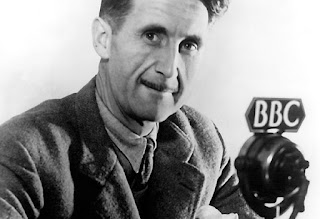
by Andy Brooks
George Orwell: Enigmatic Socialist: Editor, Paul Flewers, 192pp, £6.00. Socialist Platform, London 2005.
“JUST WHAT the world needs. Yet another book on George Orwell” the editor ironically notes in his introduction but then proceeds to justify this anthology drawn largely from the British Trotskyist press.
The reason, which becomes clear as one reads through these Orwellian essays, is the desire to reclaim Orwell for the “left” following his exposure as a police informer in 1996, coupled with an ongoing desire of British Trotskyists for a literary icon who they can call their own.
Unfortunately for them Orwell, the pen name of Eric Arthur Blair, was and remains an icon of the bourgeoisie whose vicious anti-Sovietism far outweighs the left social democratic principles he claims to uphold.
Though a prolific writer, Orwell’s literary fame rests almost exclusively on his two anti-communist satires Animal Farm and 1984. Without them Orwell’s works would still be gathering dust in libraries along with other forgotten Thirties writers. But these two books rapidly became ideological weapons of the Cold War to be quoted by reactionaries and Trotskyists alike in their denigration of the achievements of the Soviet Union and the Stalin leadership.
Almost compulsory reading in British secondary schools, dramatised and televised, 1984 and Animal Farm are Anglo-American imperialism’s equivalent of the Protocols of the Council of Zion. All are works of fiction.
The only difference is that the Protocols were used by the Czarists and later the Nazis to justify the persecution of Jews while Animal Farm and 1984 was used to justify the anti-communist witch-hunts that swept America and western Europe in the 1950s.
Orwell’s “socialism” is indeed “enigmatic” for Trotskyists because he was never a revolutionary socialist or indeed a follower of Leon Trotsky. Though he fought fascism in Spain and sided with the Spanish Trotskyist opposition, Orwell clearly did not believe that the working class was the engine of change. Workers are either the bleating “sheep” of Animal Farm or the powerless “proles” of 1984 who are bought off with a diet of cheap gin, pornography and rigged national lotteries. Nor does he have much hope for a revolutionary vanguard. The animals’ farm is run by greedy pigs while the “Oceania” of 1984 is led by a cynical and venal “Inner Party” of brutes and psychopaths.
The chief pig, “Napoleon” is clearly meant to be Joseph Stalin but at the farm the Trotsky-like equivalent is “Snowball” who helps himself to the milk and apples with the rest of the pigs when the animals take over. In 1984 Stalin is, of course, “Big Brother” while “Emmanuel Goldstein” fulfils Trotsky’s role though in this case Goldstein’s “book” is apparently a creation of the secret police and his whole underground resistance a honey-trap set up by those dreaded “Thought Police”.
This is not the place for a detailed critique of Animal Farm or 1984 and though the contributors to this book focus largely on these novels their approach is, needless to say given where they’re coming from, one-sided.
So what is the use of this book? Well if you are unfortunate enough to have to study Orwell’s novels for English Literature at school or college this fully annotated book is an excellent source to pillage and plunder. If your teacher or lecturer is not familiar with the authors you might even get away with passing off some of the observations as your own!
Turnham Green Peace Market
by Alan Rogers
SOUTHALL New Communist Party ran its usual stall last Saturday. On the basis of previous experience comrades had produced jars of a variety of jams and marmalades, which attracted some attention from the public.
The weather could have been kinder and the attendance at this year’s market was down.
However a lot of the jams and marmalades were sold, along with copies of the New Worker, Marxist Leninist literature, CDs (quite popular) and other goods.
Some of the conversations were heartening: the young black South African who bought Lenin’s Imperialism; the man (whose father had been a devoted member of Akel) who took part in our discussion with a woman (ex Scottish Socialist Party) who wanted to know what the differences were between the positions of the NCP, the Socialist Workers’ Party, Respect and so on.
And of course we met old friends and made an overall profit of £72.
SOUTHALL New Communist Party ran its usual stall last Saturday. On the basis of previous experience comrades had produced jars of a variety of jams and marmalades, which attracted some attention from the public.
The weather could have been kinder and the attendance at this year’s market was down.
However a lot of the jams and marmalades were sold, along with copies of the New Worker, Marxist Leninist literature, CDs (quite popular) and other goods.
Some of the conversations were heartening: the young black South African who bought Lenin’s Imperialism; the man (whose father had been a devoted member of Akel) who took part in our discussion with a woman (ex Scottish Socialist Party) who wanted to know what the differences were between the positions of the NCP, the Socialist Workers’ Party, Respect and so on.
And of course we met old friends and made an overall profit of £72.
Gate Gourmet workers’ rally at TUC
WHILE TUC conference was in session on Monday several hundred Gate Gourmet workers staged a rally outside the conference hall. Most of them are members of west London’s Asian community that supplies a large proportion of all the workers at Heathrow.
They held up banners and chanted “we want our jobs back” as they were met by Tony Woodley.
He told them: “Five weeks ago you were unfairly sacked by a ruthless, union-busting employer, but I can assure you that the battle goes on,” Woodley told the crowd.
The American-owned company claims it is losing money and desperately needs to cut costs.
The demonstrating workers won a standing ovation from conference delegates as they entered the conference hall.
Tony Woodley described Texas Pacific, owner of the catering company, as “a renegade venture capitalist company headed by American union-busting bosses”.
He accused the company of “plotting for a year to sack low paid workers” while “secretly recruiting agency labour on still lower rates on the orders of a cowboy capitalist from Texas”.
One of the workers, Umesh Dalal told the crowd outside the conference hall of how he had been sitting in the staff canteen last month when managers told workers they had been dismissed. He said: “I was on my tea break at the time so I was really shocked. We are determined to fight for justice and I want my job back.”
TGWU negotiations with Gate Gourmet have produced an offer to reinstate most workers but the company is still refusing to take back workers it described as “trouble makers”.
The workers are receiving solidarity support from unions in America, representing the workforce of Texas Pacific there.
Some Gate Gourmet workers have travelled to American to take part in rallies in Chicago, San Francisco and Los Angeles. The rallies are demanding the reinstatement of all the sacked workers and are being organised jointly by the Teamsters, Unite Here and the TGWU.
Across the Atlantic, Gate Gourmet has been seeking unreasonably severe concessions from its US employees. The unions have fought the demands, most recently compelling the company to reinstate health coverage that it had unilaterally revoked.
Jim Hoffa, general president of the Teamsters, said, “We’re inspired by our London brothers and sisters’ determination to fight Gate Gourmet’s outrageous anti-worker behaviour. Labour unions are here to protect workers from unfair employer tactics like those of Gate Gourmet.”
They held up banners and chanted “we want our jobs back” as they were met by Tony Woodley.
He told them: “Five weeks ago you were unfairly sacked by a ruthless, union-busting employer, but I can assure you that the battle goes on,” Woodley told the crowd.
The American-owned company claims it is losing money and desperately needs to cut costs.
The demonstrating workers won a standing ovation from conference delegates as they entered the conference hall.
Tony Woodley described Texas Pacific, owner of the catering company, as “a renegade venture capitalist company headed by American union-busting bosses”.
He accused the company of “plotting for a year to sack low paid workers” while “secretly recruiting agency labour on still lower rates on the orders of a cowboy capitalist from Texas”.
One of the workers, Umesh Dalal told the crowd outside the conference hall of how he had been sitting in the staff canteen last month when managers told workers they had been dismissed. He said: “I was on my tea break at the time so I was really shocked. We are determined to fight for justice and I want my job back.”
TGWU negotiations with Gate Gourmet have produced an offer to reinstate most workers but the company is still refusing to take back workers it described as “trouble makers”.
The workers are receiving solidarity support from unions in America, representing the workforce of Texas Pacific there.
Some Gate Gourmet workers have travelled to American to take part in rallies in Chicago, San Francisco and Los Angeles. The rallies are demanding the reinstatement of all the sacked workers and are being organised jointly by the Teamsters, Unite Here and the TGWU.
Across the Atlantic, Gate Gourmet has been seeking unreasonably severe concessions from its US employees. The unions have fought the demands, most recently compelling the company to reinstate health coverage that it had unilaterally revoked.
Jim Hoffa, general president of the Teamsters, said, “We’re inspired by our London brothers and sisters’ determination to fight Gate Gourmet’s outrageous anti-worker behaviour. Labour unions are here to protect workers from unfair employer tactics like those of Gate Gourmet.”
Saturday, September 10, 2005
T&G demands law change after Gate Gourmet
THE TRANSPORT and General Workers’ Union is planning to table an emergency motion at the annual TUC conference in two weeks’ time calling for a change in Britain’s labour laws to outlaw the underhand practices of the airline caterer Gate Gourmet.
The union then hopes to take the struggle forward to the Labour Party conference next month. It is determined to put the Government and current labour law in the spotlight following one of the most bitter industrial disputes of recent years.
Relations between the TGWU and US-owned Gate Gourmet deteriorated last week after chairman Dave Siegel accused 200 of the 667 employees sacked after unofficial industrial action last month of being militants.
At the same time the union claimed the company had backtracked on a deal over redundancy terms. Gate Gourmet is now refusing to reinstate 200 of the sacked workers, claiming that they are “militants” – after the company had agreed to offer reinstatement or a generous voluntary redundancy package to its entire Heathrow staff.
“Siegel’s comments are offensive. It is nonsense to describe our members as militants. Mainly he is talking about middle-aged Asian women,” said TGWU general secretary Tony Woodley.
He also said: “The Gate Gourmet scandal has highlighted a number of important areas where employment law is tilted towards bad employers and against the legitimate rights of workers.
“We are going to be giving the Government no rest until these issues are addressed.”
A TGWU officer said the union’s focus was on two specific areas where it believed employment law was ineffective. First: “We believe that they prepared for and provoked an industrial dispute in order to sack workers.”
He said that were it proved that a company provoked unofficial industrial action; employees involved should have the same protection as workers striking legitimately. Such workers cannot be dismissed for 12 weeks after the action.
The move comes in response to revelations last month that Gate Gourmet had such a plan, and referred to it in leaked internal documents. The company did not deny it had considered the option, but said it had decided against exercising it.
The second area involves drafting in temporary workers on lower pay than full-time employees, particularly when there are plans for redundancies.
This issue could fall under the EU directive on agency labour. A third point covers solidarity action – also known as secondary action – an issue that is raised annually at TUC.
Secondary action is illegal in the Britain but the TGWU believes it is legitimate in some cases where staff at a parent company strike in support of employees providing services to that company via a sub-contractor.
Meanwhile Gate Gourmet is being investigated over allegations that it deceived British Airways about the cost of catering on its flights and operated a tax dodge.
A former supplier to Gate Gourmet has accused the company of making it sign a contract under which it made payments to the company’s European headquarters in Switzerland. Under the contract, Gate Gourmet received a “rebate” of £90,000 for every £3 million it paid to the supplier, Nesco Foods, of Feltham, near Heathrow. Gate Gourmet was allegedly able to take advantage of lower tax rates by receiving the money in Zurich.
The union then hopes to take the struggle forward to the Labour Party conference next month. It is determined to put the Government and current labour law in the spotlight following one of the most bitter industrial disputes of recent years.
Relations between the TGWU and US-owned Gate Gourmet deteriorated last week after chairman Dave Siegel accused 200 of the 667 employees sacked after unofficial industrial action last month of being militants.
At the same time the union claimed the company had backtracked on a deal over redundancy terms. Gate Gourmet is now refusing to reinstate 200 of the sacked workers, claiming that they are “militants” – after the company had agreed to offer reinstatement or a generous voluntary redundancy package to its entire Heathrow staff.
“Siegel’s comments are offensive. It is nonsense to describe our members as militants. Mainly he is talking about middle-aged Asian women,” said TGWU general secretary Tony Woodley.
He also said: “The Gate Gourmet scandal has highlighted a number of important areas where employment law is tilted towards bad employers and against the legitimate rights of workers.
“We are going to be giving the Government no rest until these issues are addressed.”
A TGWU officer said the union’s focus was on two specific areas where it believed employment law was ineffective. First: “We believe that they prepared for and provoked an industrial dispute in order to sack workers.”
He said that were it proved that a company provoked unofficial industrial action; employees involved should have the same protection as workers striking legitimately. Such workers cannot be dismissed for 12 weeks after the action.
The move comes in response to revelations last month that Gate Gourmet had such a plan, and referred to it in leaked internal documents. The company did not deny it had considered the option, but said it had decided against exercising it.
The second area involves drafting in temporary workers on lower pay than full-time employees, particularly when there are plans for redundancies.
This issue could fall under the EU directive on agency labour. A third point covers solidarity action – also known as secondary action – an issue that is raised annually at TUC.
Secondary action is illegal in the Britain but the TGWU believes it is legitimate in some cases where staff at a parent company strike in support of employees providing services to that company via a sub-contractor.
Meanwhile Gate Gourmet is being investigated over allegations that it deceived British Airways about the cost of catering on its flights and operated a tax dodge.
A former supplier to Gate Gourmet has accused the company of making it sign a contract under which it made payments to the company’s European headquarters in Switzerland. Under the contract, Gate Gourmet received a “rebate” of £90,000 for every £3 million it paid to the supplier, Nesco Foods, of Feltham, near Heathrow. Gate Gourmet was allegedly able to take advantage of lower tax rates by receiving the money in Zurich.
Soldiers should not be above the law
by Theo Russell
A NEW campaign to challenge the culture of brutality and secrecy within the British armed forces was launched last Monday at a meeting in London.
The End Impunity campaign is calling for the armed forces to be made accountable for human rights abuses and is supported by a wide range of human rights groups and campaigns, including the families of soldiers who died at Deepcut and other army bases.
Paul O’Connor of the Pat Finucane Centre in Belfast spoke on the case of Peter McBride, who was shot as he ran away from an army checkpoint in Belfast in on 4th September 1992.
Two members of the Scots Guards were convicted of murder and received life sentences, but then given early release and allowed to rejoin the British Army. One was later promoted despite promises to the Irish government, and both served in the Iraq war.
Many human rights groups and leading lawyers from several countries have backed the demand for the soldiers to be discharged.
Leading human rights lawyer Phil Shiner, who is representing 50 families from Iraq, described how the truth about the abuses at the army’s Camp Breadbasket near Basra, have been glossed over by the Army and suppressed by the media.
He said the abuse was far greater than people have been told, with large numbers of Iraqis rounded up from the countryside, and said it was “open season for squaddies who wanted to give detainees a kicking”.
He gave the example of Baha Mousa, who died with horrific injuries across his body, with the skin on one side of his face taken off. Mousa was one of eight men arrested at a hotel suspected of involvement in a bomb attack, all of whom suffered prolonged beatings and sleep deprivation. One detainee was forced to cut another’s finger off.
Shiner described the court martial at the British base at Osnabruck in Germany as “a complete farce”, with the Iraqi families and himself denied any access. No charges were brought for murder or torture, instead an officer was charged with negligence.
He has sent a report to the Attorney General describing a policy of systematic torture and abuse with no accountability, and calling for a proper system of investigation by an independent authority, and public funds for families to enable them to participate in the process.
The meeting heard a powerful contribution from Jeff Green of the Deepcut and Beyond Families Group on their campaign for human rights, truth and justice.
“We are sick and tired of lies and cover-ups. At Deepcut, Catterick, Northern Ireland and overseas, bullies are getting away with murder. Zero tolerance is not enough – we need prosecutions. The families must be involved – they have no hidden agenda, just a need for closure.”
Leading human rights barrister Mike Mansfield, who has represented the Birmingham Six and the Bloody Sunday relatives, pointed out that the main concern of families was not the truth, but accountability, which he said “cannot be achieved through the ballot box”.
He described the Stephen Lawrence campaign as a major breakthrough, with an inquiry appointed by Labour which for the first time identified institutional racism in the police force.
But he warned the meeting that the same government has now effectively abolished genuine public inquiries in the future. In June Britain broke a commitment to the Irish government and Canadian judge Peter Cory to hold inquiries into four cases in the north of Ireland.
Instead the Inquiries Act was passed on 7th June. The first major change since 1921, this places any inquiry under the political control of the Government and excludes Parliament from the process.
Inquiries can no longer determine civil or criminal liability; the head of the inquiry will be appointed by a minister; restrictions can be imposed on public access and access to official documents. The Government now has power to halt an inquiry – including existing inquiries such as that into Bloody Sunday – or prevent the publication of its report.
Paul O’Connor ended the meeting by calling for MPs to be lobbied and questioned about the Peter McBride and other cases, and in particular to attempt to have the Armed Forces bill scheduled for November to be amended in line with the End Impunity Campaign.
The campaign has produced postcards addressed to MPs and can be contacted by email at pfc@iol.ie and the campaign’s website is at www.serve.com/pfc.
A NEW campaign to challenge the culture of brutality and secrecy within the British armed forces was launched last Monday at a meeting in London.
The End Impunity campaign is calling for the armed forces to be made accountable for human rights abuses and is supported by a wide range of human rights groups and campaigns, including the families of soldiers who died at Deepcut and other army bases.
Paul O’Connor of the Pat Finucane Centre in Belfast spoke on the case of Peter McBride, who was shot as he ran away from an army checkpoint in Belfast in on 4th September 1992.
Two members of the Scots Guards were convicted of murder and received life sentences, but then given early release and allowed to rejoin the British Army. One was later promoted despite promises to the Irish government, and both served in the Iraq war.
Many human rights groups and leading lawyers from several countries have backed the demand for the soldiers to be discharged.
Leading human rights lawyer Phil Shiner, who is representing 50 families from Iraq, described how the truth about the abuses at the army’s Camp Breadbasket near Basra, have been glossed over by the Army and suppressed by the media.
He said the abuse was far greater than people have been told, with large numbers of Iraqis rounded up from the countryside, and said it was “open season for squaddies who wanted to give detainees a kicking”.
He gave the example of Baha Mousa, who died with horrific injuries across his body, with the skin on one side of his face taken off. Mousa was one of eight men arrested at a hotel suspected of involvement in a bomb attack, all of whom suffered prolonged beatings and sleep deprivation. One detainee was forced to cut another’s finger off.
Shiner described the court martial at the British base at Osnabruck in Germany as “a complete farce”, with the Iraqi families and himself denied any access. No charges were brought for murder or torture, instead an officer was charged with negligence.
He has sent a report to the Attorney General describing a policy of systematic torture and abuse with no accountability, and calling for a proper system of investigation by an independent authority, and public funds for families to enable them to participate in the process.
The meeting heard a powerful contribution from Jeff Green of the Deepcut and Beyond Families Group on their campaign for human rights, truth and justice.
“We are sick and tired of lies and cover-ups. At Deepcut, Catterick, Northern Ireland and overseas, bullies are getting away with murder. Zero tolerance is not enough – we need prosecutions. The families must be involved – they have no hidden agenda, just a need for closure.”
Leading human rights barrister Mike Mansfield, who has represented the Birmingham Six and the Bloody Sunday relatives, pointed out that the main concern of families was not the truth, but accountability, which he said “cannot be achieved through the ballot box”.
He described the Stephen Lawrence campaign as a major breakthrough, with an inquiry appointed by Labour which for the first time identified institutional racism in the police force.
But he warned the meeting that the same government has now effectively abolished genuine public inquiries in the future. In June Britain broke a commitment to the Irish government and Canadian judge Peter Cory to hold inquiries into four cases in the north of Ireland.
Instead the Inquiries Act was passed on 7th June. The first major change since 1921, this places any inquiry under the political control of the Government and excludes Parliament from the process.
Inquiries can no longer determine civil or criminal liability; the head of the inquiry will be appointed by a minister; restrictions can be imposed on public access and access to official documents. The Government now has power to halt an inquiry – including existing inquiries such as that into Bloody Sunday – or prevent the publication of its report.
Paul O’Connor ended the meeting by calling for MPs to be lobbied and questioned about the Peter McBride and other cases, and in particular to attempt to have the Armed Forces bill scheduled for November to be amended in line with the End Impunity Campaign.
The campaign has produced postcards addressed to MPs and can be contacted by email at pfc@iol.ie and the campaign’s website is at www.serve.com/pfc.
London civil service workers fight job cuts
THE PCS civil service union last week issued ballot papers for a one-day London wide strike followed by discontinuous action over planned Government job cuts in the Department for Work and Pensions.
The ballot papers were sent out last Monday to 10,000 members of the union working in the capital’s jobcentres, benefit offices, pension centres and the Child Support Agency (CSA).
The union is balloting its members as the axe has already fallen on more than 1000 jobs across London, leading to a deterioration of key services such as benefit payments and job broking services which the most vulnerable people in society rely on.
The cuts are part of a government drive to cull 30,000 jobs in the DWP across the Britain and a further 70,000 across the rest of the civil service, with London bearing the brunt of many of the cuts.
The ballot will close on 21st September 2005 and the result announced shortly after.
PCS general secretary Mark Serwotka said: “We are now seeing the disastrous consequences of arbitrary Government cuts on London’s jobcentres, benefit offices and pensions centres.
“As the jobs go the work remains and damage is being done to services that some of the most vulnerable in society rely on, such as benefits and getting back into work.
“Our members are working in increasingly intolerable conditions seeing the services they care about suffer as a result of crude cuts.
“Strike action is not a step we take lightly and we stand ready to reach a negotiated outcome that meets the interests of the public and staff, but the Government need to take stock of the damage its cuts programme is having and think again.”
The ballot papers were sent out last Monday to 10,000 members of the union working in the capital’s jobcentres, benefit offices, pension centres and the Child Support Agency (CSA).
The union is balloting its members as the axe has already fallen on more than 1000 jobs across London, leading to a deterioration of key services such as benefit payments and job broking services which the most vulnerable people in society rely on.
The cuts are part of a government drive to cull 30,000 jobs in the DWP across the Britain and a further 70,000 across the rest of the civil service, with London bearing the brunt of many of the cuts.
The ballot will close on 21st September 2005 and the result announced shortly after.
PCS general secretary Mark Serwotka said: “We are now seeing the disastrous consequences of arbitrary Government cuts on London’s jobcentres, benefit offices and pensions centres.
“As the jobs go the work remains and damage is being done to services that some of the most vulnerable in society rely on, such as benefits and getting back into work.
“Our members are working in increasingly intolerable conditions seeing the services they care about suffer as a result of crude cuts.
“Strike action is not a step we take lightly and we stand ready to reach a negotiated outcome that meets the interests of the public and staff, but the Government need to take stock of the damage its cuts programme is having and think again.”
Friday, September 02, 2005
Gate Gourmet offers a deal
GATE GOURMET, the Heathrow airline catering company that sacked 675 workers on 10th August after deliberately provoking a walkout in a strategy to replace the existing workforce with a cheaper one, last week started to offer voluntary redundancy terms to all its workers, including those who walked out.
The American-owned company is still seeking a big reduction in the workforce but, under pressure from the Transport and General Workers’ Union, British Airways and unions in the United States, it is now negotiating a deal.
Gate Gourmet says it must reduce costs if it is to survive. But British Airways has offered the company an improved contract with more money to provide in-flight meals.
BA is anxious to be able once again to offer its passengers hot meals in-flight and to avoid further solidarity action by BA employees in support of the sacked gate Gourmet workers, like the unofficial three-day walkout of baggage handlers three weeks ago. This walkout grounded thousands of BA flights at the height of the holiday season.
Both BA and Gate Gourmet have refused to comment on whether it has promised to help Gate Gourmet with the redundancy terms it is now offering. A figure of £7 million was mentioned in the press.
The package on offer is two-and-a-half times the statutory minimum and includes two times the weekly pay for every completed year of service.
The offer is being sent by letter to each worker this weekend.
But the dispute is far from over. The TGWU has warned that there could be wrangles over the treatment of staff who staged an unofficial walkout in protest at the cuts.
Gate Gourmet says it will not take back the most militant staff, while the TGWU is insisting that the 667 sacked strikers and the 1,400 other staff are treated equally.
Both sides said they hoped to resolve the dispute when the level of acceptances of redundancy is clear after the end of this week. The TGWU said that it held no brief to encourage its members to take redundancy.
Meanwhile across the Atlantic the union Unite Here, which represents half a million American hospitality workers, has threatened to take solidarity action if Gate Gourmet fails to reach an honourable deal with the sacked Heathrow workers.
Union president Bruce Rayner said the members would “take every lawful measure” in support of the Heathrow workers.
Unite Here and the International Brotherhood of Teamsters recently forced Gate Gourmet to restore the health coverage rights of its workforce in the US.
Rayner wrote to Gate Gourmet chief executive David Seigel saying: “I write to express Unite Here’s unyielding support for the Transport and General Workers’ Union members negotiating with Gate Gourmet in the UK.
“As you know, Unite Here and the International Brotherhood of Teamsters have been negotiating with Gate Gourmet on behalf of 6,000 members working at your US kitchens.
“Let there be no doubt, we consider your assault on the union employees in London to be an assault on union members everywhere. We are outraged by such immoral behaviour and we expect that you will resolve this dispute by reinstating all of the fired workers.
“Failure to resolve the matter in the UK will certainly cause the unrest to spread across the Atlantic as our members will be forced to take every lawful measure possible to support our fellow union members.”
The American-owned company is still seeking a big reduction in the workforce but, under pressure from the Transport and General Workers’ Union, British Airways and unions in the United States, it is now negotiating a deal.
Gate Gourmet says it must reduce costs if it is to survive. But British Airways has offered the company an improved contract with more money to provide in-flight meals.
BA is anxious to be able once again to offer its passengers hot meals in-flight and to avoid further solidarity action by BA employees in support of the sacked gate Gourmet workers, like the unofficial three-day walkout of baggage handlers three weeks ago. This walkout grounded thousands of BA flights at the height of the holiday season.
Both BA and Gate Gourmet have refused to comment on whether it has promised to help Gate Gourmet with the redundancy terms it is now offering. A figure of £7 million was mentioned in the press.
The package on offer is two-and-a-half times the statutory minimum and includes two times the weekly pay for every completed year of service.
The offer is being sent by letter to each worker this weekend.
But the dispute is far from over. The TGWU has warned that there could be wrangles over the treatment of staff who staged an unofficial walkout in protest at the cuts.
Gate Gourmet says it will not take back the most militant staff, while the TGWU is insisting that the 667 sacked strikers and the 1,400 other staff are treated equally.
Both sides said they hoped to resolve the dispute when the level of acceptances of redundancy is clear after the end of this week. The TGWU said that it held no brief to encourage its members to take redundancy.
Meanwhile across the Atlantic the union Unite Here, which represents half a million American hospitality workers, has threatened to take solidarity action if Gate Gourmet fails to reach an honourable deal with the sacked Heathrow workers.
Union president Bruce Rayner said the members would “take every lawful measure” in support of the Heathrow workers.
Unite Here and the International Brotherhood of Teamsters recently forced Gate Gourmet to restore the health coverage rights of its workforce in the US.
Rayner wrote to Gate Gourmet chief executive David Seigel saying: “I write to express Unite Here’s unyielding support for the Transport and General Workers’ Union members negotiating with Gate Gourmet in the UK.
“As you know, Unite Here and the International Brotherhood of Teamsters have been negotiating with Gate Gourmet on behalf of 6,000 members working at your US kitchens.
“Let there be no doubt, we consider your assault on the union employees in London to be an assault on union members everywhere. We are outraged by such immoral behaviour and we expect that you will resolve this dispute by reinstating all of the fired workers.
“Failure to resolve the matter in the UK will certainly cause the unrest to spread across the Atlantic as our members will be forced to take every lawful measure possible to support our fellow union members.”
Review: The Facts on the Ground
The facts on the ground
by Robert Laurie
Maqlubeh or Facts on the Ground, London: Camden Abu Dis Friendship Association, 2005 pp. 28. £2.00 available from CADFA, PO Box 34265, London NW5 2WD. The group can be contacted by email at camdenabudis@btinternet.com.
ABU DIS is a small town in Israeli occupied Palestine separated from the old City of Jerusalem by the Mount of Olives. The population is about 10,000 excluding the students of Al-Quds University. Since 2003 it has been divided by the Israeli built Occupation Wall.
In April of this year a delegation of activists from north London visited Abu Dis to learn at first hand what life is like for the Palestinians under Zionist occupation. This pamphlet, written by Nandita Dowson provides a short account of that visit and is sold to raise funds to support the work of CADFA.
This work includes organising a return visit to London which takes place next month. While CADFA campaigns to establish formal twinning links between Abu Dis and Camden it also provides medical and educational aid through its various Links Groups.
The “Maqlubeh” of the somewhat curious title of the booklet refers to a traditional Palestinian dish which is served upside down from the cooking pan. Abu Dis has well and truly been turned upside down by both the Israeli occupation which began in 1967, the more recent construction of the Occupation Wall has made life much harsher.
Even before the 1967 occupation Abu Dis was affected by an influx of refugees following the ethnic cleansing of Palestinians when the Israeli state was founded in 1948 and the severing of links with Jerusalem and the rest of occupied Palestine. The other part of the title, Facts on the Ground, refers to the Israeli policy of rapidly expanding Zionist settlements on Palestinian land in strengthen their hand in any future negotiations over boundaries.
In a series of short chapters the booklet calmly describes the harsh lives of the Palestinians, often contrasting their difficult lives with those of the Israeli settlers. Israeli houses have swimming pools while Palestinians have an unreliable water supply provided by the Jerusalem municipality at extortionate cost. Palestinians are subject to severe and complex pass laws. The worst feature of life in the town is the Israeli built wall which cuts off the town from East Jerusalem. Farmers are cut off from their land, while routine tasks such as attending a hospital app-ointment are fraught with difficulty when the wall has to be crossed.
These difficulties are deliberately designed to persuade the Palestinian population to give up in despair and abandon their homes and farms to the settlers.Education is also disrupted as journeys to and from school are difficult for teachers and pupils alike. also covered are the problems facing young people and the health services.
This pamphlet is well worth buying both for the details of the reality of life under the occupation and to support the links between London and Abu Dis.
by Robert Laurie
Maqlubeh or Facts on the Ground, London: Camden Abu Dis Friendship Association, 2005 pp. 28. £2.00 available from CADFA, PO Box 34265, London NW5 2WD. The group can be contacted by email at camdenabudis@btinternet.com.
ABU DIS is a small town in Israeli occupied Palestine separated from the old City of Jerusalem by the Mount of Olives. The population is about 10,000 excluding the students of Al-Quds University. Since 2003 it has been divided by the Israeli built Occupation Wall.
In April of this year a delegation of activists from north London visited Abu Dis to learn at first hand what life is like for the Palestinians under Zionist occupation. This pamphlet, written by Nandita Dowson provides a short account of that visit and is sold to raise funds to support the work of CADFA.
This work includes organising a return visit to London which takes place next month. While CADFA campaigns to establish formal twinning links between Abu Dis and Camden it also provides medical and educational aid through its various Links Groups.
The “Maqlubeh” of the somewhat curious title of the booklet refers to a traditional Palestinian dish which is served upside down from the cooking pan. Abu Dis has well and truly been turned upside down by both the Israeli occupation which began in 1967, the more recent construction of the Occupation Wall has made life much harsher.
Even before the 1967 occupation Abu Dis was affected by an influx of refugees following the ethnic cleansing of Palestinians when the Israeli state was founded in 1948 and the severing of links with Jerusalem and the rest of occupied Palestine. The other part of the title, Facts on the Ground, refers to the Israeli policy of rapidly expanding Zionist settlements on Palestinian land in strengthen their hand in any future negotiations over boundaries.
In a series of short chapters the booklet calmly describes the harsh lives of the Palestinians, often contrasting their difficult lives with those of the Israeli settlers. Israeli houses have swimming pools while Palestinians have an unreliable water supply provided by the Jerusalem municipality at extortionate cost. Palestinians are subject to severe and complex pass laws. The worst feature of life in the town is the Israeli built wall which cuts off the town from East Jerusalem. Farmers are cut off from their land, while routine tasks such as attending a hospital app-ointment are fraught with difficulty when the wall has to be crossed.
These difficulties are deliberately designed to persuade the Palestinian population to give up in despair and abandon their homes and farms to the settlers.Education is also disrupted as journeys to and from school are difficult for teachers and pupils alike. also covered are the problems facing young people and the health services.
This pamphlet is well worth buying both for the details of the reality of life under the occupation and to support the links between London and Abu Dis.
Friday, August 26, 2005
Why did Paul Coker die?
by Daphne Liddle
AROUND 100 family friends and supporters of Paul Coker, who died in mysterious circumstances in Plumstead police station on 6th August, held a protest vigil outside the station on Tuesday evening.
The event was supported by the Families for Justice Campaign, the Uhuru Movement and Greenwich Council for Racial Equality. It attracted support from many passers-by who had been unaware of the tragedy.
Paul came from a mixed family – an African father and English mother. They were present with his girlfriend, his sisters and their children as well as uncles and aunts, all deeply shocked by Paul’s sudden, unexplained death.
He had been arrested, allegedly for causing a disturbance, subdued by several police officers and then put in a cell. The next thing the family knew was that the police were informing them that Paul was dead – with no explanation of how it happened.
The tragedy is being investigated by the Independent Police Complaints Commission. While that investigation is proceeding, the police are refusing to tell the family anything. An official post mortem has been inconclusive.
Feelings ran high a few times on Tuesday evening, with some of Paul’s friends expressing their anger to the police very forcefully.
Police officers based at Plumstead Police station over 10 years ago significantly failed to arrest the racist killers of black teenager Stephen Lawrence.
After the McPherson inquiry into Stephen Lawrence’s killing, which exposed the deep-seated institutional racism of the police who dealt with the case, big changes were supposed to have happened at Plumstead police station and it seemed in recent years that relations with the local black community had been improving.
Paul Coker knew Stephen Lawrence; they had attended the same school. Paul was the son of Sam Coker, a former councillor and political activist who had been among many at an anti-racist meeting at nearby Welling library that was attacked by British National Party thugs. Sam, a former Nigerian army PT instructor, had leapt out of an upstairs window in order to grapple with a couple of fascists in the street below. Paul also kept himself very fit.
won case
Paul Coker had won a compensation case against the police six years ago and had initiated a second legal action against the prison service, claiming he had been assaulted by a prison officer while serving a one-year sentence for burglary.
On 6th August police were called to Paul’s girlfriend’s flat because of a disturbance, the two had had a loud argument. By the time the police arrived the argument was over but 10 officers arrested Paul anyway.
Lucy, the girlfriend, said that police had barred her from the flat during the arrest. She said she could hear him screaming: “You are killing me. You are killing me,” in a way she had never heard a man scream before. Then all went quiet and the police carried Paul out. He was not struggling.
He was found dead at 6.45am but Lucy was not told until 11am and Paul’s mother was not told until 3pm.
Markhan Bajwa, who chairs GCRE, said: “Most of these deaths in custody involve young black men. I don’t know what happens when people go into a police station and end up dead. How can a fit young man go into a station and be dead within two hours?”
as long as it takes
During the picket of the police station last Tuesday there was a short ceremony as the family laid flowers by the police station entrance and their vicar said a prayer. Paul’s mother made a brief speech in which she pledged to her son to fight for justice for as long as it takes.
She told the crowd that Paul had been a fit and healthy young man and had written some poetry. One of his poems was entitled “Time is the master”. Patricia Coker declared: “Indeed time is the master and time will see that justice is done for my son.”
AROUND 100 family friends and supporters of Paul Coker, who died in mysterious circumstances in Plumstead police station on 6th August, held a protest vigil outside the station on Tuesday evening.
The event was supported by the Families for Justice Campaign, the Uhuru Movement and Greenwich Council for Racial Equality. It attracted support from many passers-by who had been unaware of the tragedy.
Paul came from a mixed family – an African father and English mother. They were present with his girlfriend, his sisters and their children as well as uncles and aunts, all deeply shocked by Paul’s sudden, unexplained death.
He had been arrested, allegedly for causing a disturbance, subdued by several police officers and then put in a cell. The next thing the family knew was that the police were informing them that Paul was dead – with no explanation of how it happened.
The tragedy is being investigated by the Independent Police Complaints Commission. While that investigation is proceeding, the police are refusing to tell the family anything. An official post mortem has been inconclusive.
Feelings ran high a few times on Tuesday evening, with some of Paul’s friends expressing their anger to the police very forcefully.
Police officers based at Plumstead Police station over 10 years ago significantly failed to arrest the racist killers of black teenager Stephen Lawrence.
After the McPherson inquiry into Stephen Lawrence’s killing, which exposed the deep-seated institutional racism of the police who dealt with the case, big changes were supposed to have happened at Plumstead police station and it seemed in recent years that relations with the local black community had been improving.
Paul Coker knew Stephen Lawrence; they had attended the same school. Paul was the son of Sam Coker, a former councillor and political activist who had been among many at an anti-racist meeting at nearby Welling library that was attacked by British National Party thugs. Sam, a former Nigerian army PT instructor, had leapt out of an upstairs window in order to grapple with a couple of fascists in the street below. Paul also kept himself very fit.
won case
Paul Coker had won a compensation case against the police six years ago and had initiated a second legal action against the prison service, claiming he had been assaulted by a prison officer while serving a one-year sentence for burglary.
On 6th August police were called to Paul’s girlfriend’s flat because of a disturbance, the two had had a loud argument. By the time the police arrived the argument was over but 10 officers arrested Paul anyway.
Lucy, the girlfriend, said that police had barred her from the flat during the arrest. She said she could hear him screaming: “You are killing me. You are killing me,” in a way she had never heard a man scream before. Then all went quiet and the police carried Paul out. He was not struggling.
He was found dead at 6.45am but Lucy was not told until 11am and Paul’s mother was not told until 3pm.
Markhan Bajwa, who chairs GCRE, said: “Most of these deaths in custody involve young black men. I don’t know what happens when people go into a police station and end up dead. How can a fit young man go into a station and be dead within two hours?”
as long as it takes
During the picket of the police station last Tuesday there was a short ceremony as the family laid flowers by the police station entrance and their vicar said a prayer. Paul’s mother made a brief speech in which she pledged to her son to fight for justice for as long as it takes.
She told the crowd that Paul had been a fit and healthy young man and had written some poetry. One of his poems was entitled “Time is the master”. Patricia Coker declared: “Indeed time is the master and time will see that justice is done for my son.”
Gate Gourmet talks break down
THREE-WAY talks between the Transport and General Workers’ Union, the airline catering company Gate Gourmet and British Airways broke down in acrimony last Tuesday.
Talks may resume again within a few days but TGWU chief negotiator Brendan Gould said: “I am despondent and disgusted at the way things have been concluded and I feel very frustrated at the lack of progress. Everything we were working towards has collapsed.”
The sticking point in the negotiations is the refusal by Gate Gourmet to reinstate all the workers sacked three weeks ago after deliberate and calculated provocation by the company led to a walkout.
They have agreed to reinstate most of those sacked but still want to exclude those they label as troublemakers – meaning union activists and those who will encourage their fellow workers to resist cuts in wages and conditions. The TGWU is adamant that all must be reinstated.
This was part of a strategy by Gate Gourmet to replace its existing workforce entirely with an even lower paid one. The sacking led to an unofficial solidarity walk-out by BA’s baggage handlers that halted all BA flights from Heathrow over three days and cost BA millions.
The Texas-based Gate Gourmet claimed financial difficulties and says the terms of its contract to supply BA with airline food are causing its operation in Britain to make a loss.
During negotiations it set a deadline of Tuesday night for BA to come up with an improved contract – or Gate Gourmet would put itself into administration.
BA claims that just such a contract has been on the table for some weeks. But it said that Gate Gourmet must resolve its dispute with its staff before it can be implemented.
There are reports that, behind the scenes, the Government is putting pressure on Gate Gourmet to agree to a settlement because it is concerned that further strikes could paralyse Heathrow.
The sacked catering workers are mainly from the local Asian community, which supplies most of Heathrow’s staff. There is a high degree of sympathy for the sacked workers because of the way in which they were treated.
The TGWU asserts that Gate Gourmet’s threats to go into administration are simple blackmail.
TGWU general secretary Tony Woodley told a packed meeting of sacked workers and their supporters in a local Sikh temple that the company had planned to go into administration as a tactic to cut the workforce and wage levels.
“They always planned to do it,” he said. “They planned to go in and out of administration to put more pressure on BA so they could fulfil their cynical and well-thought-out plan. There was no consideration whatsoever for the effect on you, your families or the communities you live in.”
He said the dispute had implications for labour relations throughout Britain. “This is an issue for the whole country. Can a company walk into Britain and plan the cynical sacking of innocent men and women to cut costs and be allowed to get away with it? I say no.”
TUC general secretary Brendan Barber told the meeting: “I sense the British public share our outrage about what has happened. For a company in Britain today to say ‘you are sacked and you are sacked and you are sacked …’ – that is not the way we do business. If this dispute is not resolved, that message will just not just go around this country but around the world.”
Local Labour MPs John McDonnell, Anne Keen and Piara Khabra are backing the sacked workers, many of who are facing serious financial hardship.
The root of the problem lies in Britain’s anti-trade union laws, dating back to the Thatcher era, which forbid solidarity strikes and prevent the unions defending the workers effectively.
The Blair government is also blocking the implementation of the European Union’s “Agency Workers Directive” which would provide temporary workers with same pay and conditions as permanent staff.
Trade unions throughout the EU have been lobbying hard to get this law approved.
If enacted, companies like Gate Gourmet would no longer be able to use agency staff as cheap labour at the expense of full time workers.
Talks may resume again within a few days but TGWU chief negotiator Brendan Gould said: “I am despondent and disgusted at the way things have been concluded and I feel very frustrated at the lack of progress. Everything we were working towards has collapsed.”
The sticking point in the negotiations is the refusal by Gate Gourmet to reinstate all the workers sacked three weeks ago after deliberate and calculated provocation by the company led to a walkout.
They have agreed to reinstate most of those sacked but still want to exclude those they label as troublemakers – meaning union activists and those who will encourage their fellow workers to resist cuts in wages and conditions. The TGWU is adamant that all must be reinstated.
This was part of a strategy by Gate Gourmet to replace its existing workforce entirely with an even lower paid one. The sacking led to an unofficial solidarity walk-out by BA’s baggage handlers that halted all BA flights from Heathrow over three days and cost BA millions.
The Texas-based Gate Gourmet claimed financial difficulties and says the terms of its contract to supply BA with airline food are causing its operation in Britain to make a loss.
During negotiations it set a deadline of Tuesday night for BA to come up with an improved contract – or Gate Gourmet would put itself into administration.
BA claims that just such a contract has been on the table for some weeks. But it said that Gate Gourmet must resolve its dispute with its staff before it can be implemented.
There are reports that, behind the scenes, the Government is putting pressure on Gate Gourmet to agree to a settlement because it is concerned that further strikes could paralyse Heathrow.
The sacked catering workers are mainly from the local Asian community, which supplies most of Heathrow’s staff. There is a high degree of sympathy for the sacked workers because of the way in which they were treated.
The TGWU asserts that Gate Gourmet’s threats to go into administration are simple blackmail.
TGWU general secretary Tony Woodley told a packed meeting of sacked workers and their supporters in a local Sikh temple that the company had planned to go into administration as a tactic to cut the workforce and wage levels.
“They always planned to do it,” he said. “They planned to go in and out of administration to put more pressure on BA so they could fulfil their cynical and well-thought-out plan. There was no consideration whatsoever for the effect on you, your families or the communities you live in.”
He said the dispute had implications for labour relations throughout Britain. “This is an issue for the whole country. Can a company walk into Britain and plan the cynical sacking of innocent men and women to cut costs and be allowed to get away with it? I say no.”
TUC general secretary Brendan Barber told the meeting: “I sense the British public share our outrage about what has happened. For a company in Britain today to say ‘you are sacked and you are sacked and you are sacked …’ – that is not the way we do business. If this dispute is not resolved, that message will just not just go around this country but around the world.”
Local Labour MPs John McDonnell, Anne Keen and Piara Khabra are backing the sacked workers, many of who are facing serious financial hardship.
The root of the problem lies in Britain’s anti-trade union laws, dating back to the Thatcher era, which forbid solidarity strikes and prevent the unions defending the workers effectively.
The Blair government is also blocking the implementation of the European Union’s “Agency Workers Directive” which would provide temporary workers with same pay and conditions as permanent staff.
Trade unions throughout the EU have been lobbying hard to get this law approved.
If enacted, companies like Gate Gourmet would no longer be able to use agency staff as cheap labour at the expense of full time workers.
The mystery of the missing footage
LONDON Underground managers and police officers last week clashed over the disappearance of crucial CCTV footage at Stockwell station on the afternoon of 22nd July, when the innocent Brazilian Jean Charles de Menezes was shot and killed by undercover police, who mistook him for a terrorist suspect.
Two Brazilian government officials arrived in London last Monday to conduct their own investigation after last week’s revelations that the police allowed a host of misleading and inaccurate versions of the events at Stockwell to prevail.
The leaks came from the investigation by the Independent Police Complaints Authority (IPCC) and show that, far from fleeing the police and vaulting the ticket barrier, Menezes, unaware that police were tracking him, entered the station calmly, took up a free newspaper, used his oyster card to go through the ticket barrier normally and walked on to the train normally.
He was not wearing a padded jacket but a light denim jacket on that hot day and police had overpowered him before he was shot eight times in the head and shoulder.
Yet just hours after the shooting Metropolitan Police chief Sir Ian Blair told the world’s press the misleading stories about a hot pursuit into the Tube station, the ticket barrier being vaulted and the padded jacket that might have concealed a suicide bomb.
Now Sir Ian Blair says he was not even told that his officers had shot the wrong man until 24 hours after the event.
Police are denying a cover up but the disappearance of the CCTV footage is all the more damning.
A police document states that none of the cameras at the scene of the shooting were working on 22nd July. They told the IPCC that the cameras in the station and on the train were not operating on that day. This is totally at odds with what the Tube station manager says and the company that operates the station – Tubelines.
The police written statement says: “Stockwell station and environs has been surveyed and all existing CCTV has been seized.
“During the course of this it has been established that although there was onboard CCTV in the train, due to previous incidents the hard drive has been removed and not replaced.
“It has also been established that there has been a technical problem with the CCTV equipment on the relevant platform and no footage exists.”
Since then Tubelines has told the press: “We are not aware of any faults on CCTV cameras at that station on that day. Nothing of that nature has been reported to us.”
However one union official pointed out that Met officers had emptied the cameras the day before, in order to investigate the failed 21st July attempted bombings.
The Tubelines report says that Jean de Menezes would have passed eight cameras – two in the station entrance pointing at the ticket barrier, another two at different points on the escalator and another at the bottom. More cameras at each end of the platform would also have caught him on film.
Meanwhile, from his holiday resort in Barbados, Prime Minister Tony Blair is giving full support to Sir Ian Blair.
But former Cabinet Minister Clare Short said that it was now clear the public had been misled about the shooting. “We’ve been lied to. This should be bigger than just calling for Sir Ian Blair to go. We need to find out exactly what happened. Who was telling us the lies?”
Two Brazilian government officials arrived in London last Monday to conduct their own investigation after last week’s revelations that the police allowed a host of misleading and inaccurate versions of the events at Stockwell to prevail.
The leaks came from the investigation by the Independent Police Complaints Authority (IPCC) and show that, far from fleeing the police and vaulting the ticket barrier, Menezes, unaware that police were tracking him, entered the station calmly, took up a free newspaper, used his oyster card to go through the ticket barrier normally and walked on to the train normally.
He was not wearing a padded jacket but a light denim jacket on that hot day and police had overpowered him before he was shot eight times in the head and shoulder.
Yet just hours after the shooting Metropolitan Police chief Sir Ian Blair told the world’s press the misleading stories about a hot pursuit into the Tube station, the ticket barrier being vaulted and the padded jacket that might have concealed a suicide bomb.
Now Sir Ian Blair says he was not even told that his officers had shot the wrong man until 24 hours after the event.
Police are denying a cover up but the disappearance of the CCTV footage is all the more damning.
A police document states that none of the cameras at the scene of the shooting were working on 22nd July. They told the IPCC that the cameras in the station and on the train were not operating on that day. This is totally at odds with what the Tube station manager says and the company that operates the station – Tubelines.
The police written statement says: “Stockwell station and environs has been surveyed and all existing CCTV has been seized.
“During the course of this it has been established that although there was onboard CCTV in the train, due to previous incidents the hard drive has been removed and not replaced.
“It has also been established that there has been a technical problem with the CCTV equipment on the relevant platform and no footage exists.”
Since then Tubelines has told the press: “We are not aware of any faults on CCTV cameras at that station on that day. Nothing of that nature has been reported to us.”
However one union official pointed out that Met officers had emptied the cameras the day before, in order to investigate the failed 21st July attempted bombings.
The Tubelines report says that Jean de Menezes would have passed eight cameras – two in the station entrance pointing at the ticket barrier, another two at different points on the escalator and another at the bottom. More cameras at each end of the platform would also have caught him on film.
Meanwhile, from his holiday resort in Barbados, Prime Minister Tony Blair is giving full support to Sir Ian Blair.
But former Cabinet Minister Clare Short said that it was now clear the public had been misled about the shooting. “We’ve been lied to. This should be bigger than just calling for Sir Ian Blair to go. We need to find out exactly what happened. Who was telling us the lies?”
TGWU to sue Stratford food company
AMBALA, a food company based in Stratford, east London, faces legal action over claims that it mistreated workers during a pay dispute earlier this year.
The Transport and General Workers’ Union (TGWU) has instructed lawyers to prepare a case against Ambala Foods in Bridgewater Road.
Staff at the factory, which produces hand-made Indian sweets, started a series of one-day weekly walkouts in April in protest at a two-year pay freeze.
Many workers earn just above the minimum wage for skilled, labour-intensive work. The dispute soured when two part-time workers said they were sacked for taking part in the strikes and the company claimed non-striking staff suffered harassment.
TGWU officer Bill Hodge said lawyers were preparing a case against the company over terms of employment and matters arising from the dispute.
The company claims that it is willing to negotiate with the TGWU. It says that workers are paid on average £7 an hour and that no one is paid less than the Government minimum wage. It also claims that it cannot afford to increase wages.
“If we increased the pay then the company would not make any profit. If the company’s earnings and productivity improved then wages, which currently run at 35 per cent of total revenue would improve,” said one company spokesperson.
Bill Hodge said: “There are a number of areas where we believe that the employer has acted unlawfully in the treatment of members of the TGWU union employed at Ambala.
“We have instructed lawyers to examine matters closely and make an application to the employment tribunal on behalf of those affected.
“This company has some of the worst employment processes I have experienced in the last 20 years. However, previous attempts to secure the interests of our members have been to no avail. Therefore we are obliged to take the final course of action available to us.”
Dinner ladies victory
THE GMB union has won sizable compensation for 17 dinner ladies employed by the London Borough of Brent in an out of court settlement against school meals private contractors Scolarest and Caterhouse Limited.
The women called on their trade union GMB for help when Brent’s schools meals contract was awarded to Scholarest and Caterhouse private contractors and the women’s right to keep their jobs while transferring to their employment contracts to the new employers was questioned by the private contractors.
Mary Turner, GMB National President and former dinner lady, will be presenting the cheque to the women on Thursday, along with GMB Organiser Tony Warr outside Brent town hall.
Anita Vadgama of Thompsons solicitors took the case on for GMB members.
GMB national president Mary Turner said: “GMB has won justice for these women who provide a vital service to the children and parents of Brent and who’s right to continue to do so was questioned by private contractors watching out for their profit margins.”
The Transport and General Workers’ Union (TGWU) has instructed lawyers to prepare a case against Ambala Foods in Bridgewater Road.
Staff at the factory, which produces hand-made Indian sweets, started a series of one-day weekly walkouts in April in protest at a two-year pay freeze.
Many workers earn just above the minimum wage for skilled, labour-intensive work. The dispute soured when two part-time workers said they were sacked for taking part in the strikes and the company claimed non-striking staff suffered harassment.
TGWU officer Bill Hodge said lawyers were preparing a case against the company over terms of employment and matters arising from the dispute.
The company claims that it is willing to negotiate with the TGWU. It says that workers are paid on average £7 an hour and that no one is paid less than the Government minimum wage. It also claims that it cannot afford to increase wages.
“If we increased the pay then the company would not make any profit. If the company’s earnings and productivity improved then wages, which currently run at 35 per cent of total revenue would improve,” said one company spokesperson.
Bill Hodge said: “There are a number of areas where we believe that the employer has acted unlawfully in the treatment of members of the TGWU union employed at Ambala.
“We have instructed lawyers to examine matters closely and make an application to the employment tribunal on behalf of those affected.
“This company has some of the worst employment processes I have experienced in the last 20 years. However, previous attempts to secure the interests of our members have been to no avail. Therefore we are obliged to take the final course of action available to us.”
Dinner ladies victory
THE GMB union has won sizable compensation for 17 dinner ladies employed by the London Borough of Brent in an out of court settlement against school meals private contractors Scolarest and Caterhouse Limited.
The women called on their trade union GMB for help when Brent’s schools meals contract was awarded to Scholarest and Caterhouse private contractors and the women’s right to keep their jobs while transferring to their employment contracts to the new employers was questioned by the private contractors.
Mary Turner, GMB National President and former dinner lady, will be presenting the cheque to the women on Thursday, along with GMB Organiser Tony Warr outside Brent town hall.
Anita Vadgama of Thompsons solicitors took the case on for GMB members.
GMB national president Mary Turner said: “GMB has won justice for these women who provide a vital service to the children and parents of Brent and who’s right to continue to do so was questioned by private contractors watching out for their profit margins.”
Friday, August 19, 2005
What's New on London Communists?
Our Communist Heritage
Four new entries including the pub that Lenin used; streets named after Lenin and Marx;Brixton prison and British communists on stamps.
Ernie Trory Books
Three essays by Ernie added.
More New Worker reports and archive at:
The New Worker Online digest
Four new entries including the pub that Lenin used; streets named after Lenin and Marx;Brixton prison and British communists on stamps.
Ernie Trory Books
Three essays by Ernie added.
More New Worker reports and archive at:
The New Worker Online digest
Irreconcilable differences
BRITISH AIRWAYS services from Heathrow Airport last weekend were brought to a standstill by an unofficial walkout by baggage handlers in solidarity with the sacked catering workers at Gateway Gourmet, the American-owned company that supplies in-flight meals to BA.
The reaction was spontaneous at the appalling and provocative way the Gateway Gourmet workers had been treated. The company had long been in financial trouble and had been locked in negotiations with the Transport and General Workers’ Union over redundancies.
In the middle of these negotiations the company introduced 130 new temporary seasonal workers – on lower wages and reduced conditions. No wonder the Gateway Gourmet workers were shocked. If the company needed extra workers, why was it trying to make redundant the workers it already had?
It was all part of a carefully worked out plan to sack the entire current workforce and take on instead a new workforce at much reduced wages and conditions. The workers, as expected, stopped working. While in the company car park they were told by megaphone that they had 20 minutes to return to their posts or be sacked. The message was garbled and many did not hear or realise what was happening.
The company then sacked its entire staff, including those on holiday or off sick, on the grounds that they were taking part in an “illegal strike”. The sacking notices had been prepared beforehand, as had the new lower-paid workforce.
Then the Daily Mirror published a leaked company memo, revealing that a year ago Gateway Gourmet had planned exactly such a manoeuvre to provoke its workers into a strike in order to sack the lot and replace them with a cheaper workforce. The chances of such a strike spreading within the airport had been recognised but discounted.
As news of the company’s cynical tactics spread, solidarity has poured in for the workers from all around the globe. The irony is that in Britain, the TGWU is barred by law from supporting the strike by the Gateway Gourmet workers and the spontaneous solidarity action by the baggage handlers. All the union can do is to act as a go-between, trying to negotiate a settlement and it must dissociate itself from the strike – or face bankruptcy.
This case like no other illustrates how Britain’s anti-trade union laws allow outrageous employers to walk all over the workforce. The company claims it wants to get rid of “outdated 1970s working practices” – meaning workers having any rights at all. They seek to replace 1970s working practices with the “master and servant” laws of the 18th century.
TGWU general secretary Tony Woodley calls for the repeal of the anti-union laws that breach the conventions of the International Labour Organisation – to which Britain is a signatory. Our working class has fewer freedoms and trade union rights than those in Europe or the United States and bosses take advantage.
Woodley goes on to say that this case highlights the dangers of the contracting out culture where large “respected” companies like BA sub-contract work they used to do themselves to cowboy companies like Gateway Gourmet who will cut wages and conditions to a bare minimum using the most outrageous manoeuvres but allowing BA to pretend the dispute is outside of its control.
But Woodley also says that repealing the anti-union laws will improve workplace relations and this will benefit everyone involved.
He’s wrong. Like many other social democrats he rejects the concept that there is an irreconcilable difference between what is good for the bosses and what is good for the workers. He tries to appeal to the better nature of the capitalists, asking them to recognise that solidarity and collective bargaining is a natural impulse for workers. The employers know it only too well, which is why they ban it if they can.
This is a class war. The contradiction between the interests of the bosses and the interests of the workers is the fundamental driving force that will eventually lead to the overthrow of capitalism.
The bosses know it and our trade union leaders should know it too. It is a no-holds-barred war. Asking nicely is not good enough. The organised working class must be organised strongly enough to be in a position to demand or it will always be weak and outmanoeuvred by greedy bosses.
The reaction was spontaneous at the appalling and provocative way the Gateway Gourmet workers had been treated. The company had long been in financial trouble and had been locked in negotiations with the Transport and General Workers’ Union over redundancies.
In the middle of these negotiations the company introduced 130 new temporary seasonal workers – on lower wages and reduced conditions. No wonder the Gateway Gourmet workers were shocked. If the company needed extra workers, why was it trying to make redundant the workers it already had?
It was all part of a carefully worked out plan to sack the entire current workforce and take on instead a new workforce at much reduced wages and conditions. The workers, as expected, stopped working. While in the company car park they were told by megaphone that they had 20 minutes to return to their posts or be sacked. The message was garbled and many did not hear or realise what was happening.
The company then sacked its entire staff, including those on holiday or off sick, on the grounds that they were taking part in an “illegal strike”. The sacking notices had been prepared beforehand, as had the new lower-paid workforce.
Then the Daily Mirror published a leaked company memo, revealing that a year ago Gateway Gourmet had planned exactly such a manoeuvre to provoke its workers into a strike in order to sack the lot and replace them with a cheaper workforce. The chances of such a strike spreading within the airport had been recognised but discounted.
As news of the company’s cynical tactics spread, solidarity has poured in for the workers from all around the globe. The irony is that in Britain, the TGWU is barred by law from supporting the strike by the Gateway Gourmet workers and the spontaneous solidarity action by the baggage handlers. All the union can do is to act as a go-between, trying to negotiate a settlement and it must dissociate itself from the strike – or face bankruptcy.
This case like no other illustrates how Britain’s anti-trade union laws allow outrageous employers to walk all over the workforce. The company claims it wants to get rid of “outdated 1970s working practices” – meaning workers having any rights at all. They seek to replace 1970s working practices with the “master and servant” laws of the 18th century.
TGWU general secretary Tony Woodley calls for the repeal of the anti-union laws that breach the conventions of the International Labour Organisation – to which Britain is a signatory. Our working class has fewer freedoms and trade union rights than those in Europe or the United States and bosses take advantage.
Woodley goes on to say that this case highlights the dangers of the contracting out culture where large “respected” companies like BA sub-contract work they used to do themselves to cowboy companies like Gateway Gourmet who will cut wages and conditions to a bare minimum using the most outrageous manoeuvres but allowing BA to pretend the dispute is outside of its control.
But Woodley also says that repealing the anti-union laws will improve workplace relations and this will benefit everyone involved.
He’s wrong. Like many other social democrats he rejects the concept that there is an irreconcilable difference between what is good for the bosses and what is good for the workers. He tries to appeal to the better nature of the capitalists, asking them to recognise that solidarity and collective bargaining is a natural impulse for workers. The employers know it only too well, which is why they ban it if they can.
This is a class war. The contradiction between the interests of the bosses and the interests of the workers is the fundamental driving force that will eventually lead to the overthrow of capitalism.
The bosses know it and our trade union leaders should know it too. It is a no-holds-barred war. Asking nicely is not good enough. The organised working class must be organised strongly enough to be in a position to demand or it will always be weak and outmanoeuvred by greedy bosses.
America’s obligation to Vietnam
by Rob Laurie
A JOINT delegation lead by Len Aldis, Secretary of the British Vietnam Friendship Society, which included Dr Madeline Sharp of Medical and Scientific Aid for Vietnam, Laos and Cambodia Aid (MSAVLA), recently held talks with the United States Embassy in London to appeal for the United States Government to assist Vietnamese in overcoming a particularly tragic legacy of America’s war in Vietnam.
Unexploded ammunition, in particular landmines are a common hazard in many former war zones. But Vietnam suffers from even graver problems. It is 30 years since American forces were forced out in 1975. In the course of the war over three million Vietnamese people lost their lives. As if the injuries of the survivors were not enough, a new generation is paying the penalty for America’s war of aggression.
During the 21 years of the war the US forces sprayed a total of 82,000,000 litres of the defoliant Agent Orange over vast areas of South Vietnam to deny forest cover to the Vietnamese resistance. The barren hills of southern Vietnam are testimony of the effectiveness of this poison.
Agent Orange has left a dreadful legacy. Environmentalists say that it will take 150 years to even begin to restore the forests, but the human legacy is even more devastating.
Shortly after the war there were many children born with horrific deformities. Today this is being repeated as children born to parents who themselves were not even born during the war have defects. Vietnam has the highest number of conjoined twins in the world today while cancer rates are very high. Medical opinion has not yet established if this is a result of a genetic mutation or if it is caused by Agent Orange entering the food chain. It has been clearly established by many scientists including those in the American National Academy of Sciences that Agent Orange is responsible for such widespread illnesses and defects.
Soldiers and their families from America’s allies in Australia, New Zealand and south Korea have also suffered. Many American veterans including Colin Powell have suffered from the effects of Agent Orange. They have been compensated following the 1996 announcement by President Clinton to pay compensation to the American Vietnam veterans “to ease the suffering our nation unintentionally caused its own sons and daughters by exposing them to Agent Orange in Vietnam”.
It was unfortunate that at the time no mention was made of the sons and daughters of Vietnam exposed to Agent Orange.
While the Vietnamese government and Red Cross do what they can the only overseas support comes for charities such as the MSAVLA and an International Friendship Village in Vietnam founded by an American veteran to provide sheltered accommodation and workshops for victims.
At the London meeting the delegation urged George W Bush, who is visiting Vietnam, to see for himself the consequences of Agent Orange and to provide adequate compensation to the victims. A letter to this effect was handed over to the incoming Ambassador. Anyone wishing to support this campaign can sign the online petition at www.petitiononline.com/AOVN/
This now has 690,000 signatures from across the globe. Labour MP Harry Cohen has put down an Early Day Motion (605) calling for the United Nations to make 10th August, the day Agent Orange was first used an International day for Victims of Chemical Weapons.
* Protesters from the Alliance of Patriots for the Re-foundation of the Congo
(APARECO) and the African Liberation Support Campaign (ALISC) last Wednesday mounted a demonstration outside the heavily fortified United States Embassy in London’s Grosvenor Square. They were protesting against the invasion of the Democratic Republic of the Congo (formerly Zaire, and earlier the Belgian Congo) by Rwanda. This invasion is effectively supported by George W Bush and his sidekick Tony Blair who are arming Rwanda in order to further their neo-colonialist struggle to secure control of Congo’s huge mineral wealth which includes gold and diamonds.
Over four million people have died in the war in the Congo; this is only one of many proxy wars in Africa by which arms companies in the imperialist countries grow rich by selling weapons to their stooges.
A JOINT delegation lead by Len Aldis, Secretary of the British Vietnam Friendship Society, which included Dr Madeline Sharp of Medical and Scientific Aid for Vietnam, Laos and Cambodia Aid (MSAVLA), recently held talks with the United States Embassy in London to appeal for the United States Government to assist Vietnamese in overcoming a particularly tragic legacy of America’s war in Vietnam.
Unexploded ammunition, in particular landmines are a common hazard in many former war zones. But Vietnam suffers from even graver problems. It is 30 years since American forces were forced out in 1975. In the course of the war over three million Vietnamese people lost their lives. As if the injuries of the survivors were not enough, a new generation is paying the penalty for America’s war of aggression.
During the 21 years of the war the US forces sprayed a total of 82,000,000 litres of the defoliant Agent Orange over vast areas of South Vietnam to deny forest cover to the Vietnamese resistance. The barren hills of southern Vietnam are testimony of the effectiveness of this poison.
Agent Orange has left a dreadful legacy. Environmentalists say that it will take 150 years to even begin to restore the forests, but the human legacy is even more devastating.
Shortly after the war there were many children born with horrific deformities. Today this is being repeated as children born to parents who themselves were not even born during the war have defects. Vietnam has the highest number of conjoined twins in the world today while cancer rates are very high. Medical opinion has not yet established if this is a result of a genetic mutation or if it is caused by Agent Orange entering the food chain. It has been clearly established by many scientists including those in the American National Academy of Sciences that Agent Orange is responsible for such widespread illnesses and defects.
Soldiers and their families from America’s allies in Australia, New Zealand and south Korea have also suffered. Many American veterans including Colin Powell have suffered from the effects of Agent Orange. They have been compensated following the 1996 announcement by President Clinton to pay compensation to the American Vietnam veterans “to ease the suffering our nation unintentionally caused its own sons and daughters by exposing them to Agent Orange in Vietnam”.
It was unfortunate that at the time no mention was made of the sons and daughters of Vietnam exposed to Agent Orange.
While the Vietnamese government and Red Cross do what they can the only overseas support comes for charities such as the MSAVLA and an International Friendship Village in Vietnam founded by an American veteran to provide sheltered accommodation and workshops for victims.
At the London meeting the delegation urged George W Bush, who is visiting Vietnam, to see for himself the consequences of Agent Orange and to provide adequate compensation to the victims. A letter to this effect was handed over to the incoming Ambassador. Anyone wishing to support this campaign can sign the online petition at www.petitiononline.com/AOVN/
This now has 690,000 signatures from across the globe. Labour MP Harry Cohen has put down an Early Day Motion (605) calling for the United Nations to make 10th August, the day Agent Orange was first used an International day for Victims of Chemical Weapons.
* Protesters from the Alliance of Patriots for the Re-foundation of the Congo
(APARECO) and the African Liberation Support Campaign (ALISC) last Wednesday mounted a demonstration outside the heavily fortified United States Embassy in London’s Grosvenor Square. They were protesting against the invasion of the Democratic Republic of the Congo (formerly Zaire, and earlier the Belgian Congo) by Rwanda. This invasion is effectively supported by George W Bush and his sidekick Tony Blair who are arming Rwanda in order to further their neo-colonialist struggle to secure control of Congo’s huge mineral wealth which includes gold and diamonds.
Over four million people have died in the war in the Congo; this is only one of many proxy wars in Africa by which arms companies in the imperialist countries grow rich by selling weapons to their stooges.
Cowboy caterer faces collapse
by Caroline Colebrook
GATEWAY Gourmet (GG), the American owned company at the centre of the strike that paralysed British Airways services from Heathrow Airport last weekend, is likely to lose its contract with BA after the Daily Mirror published evidence that the company had deliberately provoked the strike.
The evidence took the form of a leaked internal company memo from a year ago planning to provoke just such a strike. It detailed six steps:
1) recruit, train and check drivers;
2) announce the company’s intention to the trade union;
3) provoke a strike;
4) sack the current workforce;
5) escort them off the premises;
6) replace them with new staff.
BA is likely to lose £40 million because of last weekend’s strike and, like many other airline businesses, it has been struggling financially in recent years.
This is why a few years ago it sold off its own in-house catering concern to GG, a cowboy company – part of the Texas Pacific Group – that uses American union-busting techniques to drive down wages and conditions of food preparation workers.
The company is already embroiled in industrial disputes in the US, where it is using similar techniques to try to break unions and drive down costs and maximise profits.
The contract with BA was unrealistic and the London wing of GG was losing around £25 million a year. It told the unions it was in deep trouble and there had to be redundancies.
The Transport and General Workers’ Union was negotiating staff cuts with the management. The union argued that the pain of job cuts should be shared by workforce and management.
angered
So the company promptly promoted some workers to management level and then made them redundant. This dodge angered the union but did not in itself cause a strike.
Nor did the $10 million birthday party staged by David Bonderman, the American boss of GG – while telling the workers they must face cuts.
Then the company produced 130 new seasonal workers – while it was arguing that redundancies were necessary.
The workforce was outraged and spontaneously downed tools. Management declared the unofficial walk-out an illegal strike and sacked the entire workforce of nearly 800 workers – by megaphone message while most were assembled in the car park.
They then expelled the workforce from the premises and barred them from returning.
Those who could not hear clearly did not realise they were being sacked. The sacking applied also to those on holiday of off sick – though the company has since retreated a little on this.
The workers – many of them women – were mainly from the Asian community of west London, which supplies much of the workforce for the entire airport.
sympathy
Baggage handlers employed by BA were so outraged they walked out in sympathy with the catering workers, bringing BA services to a halt.
One of the women workers said: “I work for Gate Gourmet but some of my relatives are baggage handlers. I am very proud of the fight we are showing. They treated us terribly. We were held in the canteen for hours then they just pushed us out of the building. I worked there for six years. I think they have made a big mistake.”
The union held a solidarity meeting on Saturday in Southall Community Centre. It was packed by around 1,000 supporters of the sacked workers. TGWU national officer Brendan Gold said: “The meeting was a real demonstration of community solidarity, with scores of women dressed in traditional colourful saris, many of them bouncing their children on their knees, but wondering quietly what future they would have if they did not fight back against this injustice.”
hopeful
Shop steward Mrs Attwal said: “The sacked workers and their families have been very encouraged by the meeting. They want to go back to work and feel hopeful.
“They have been devastated by this week’s events. One husband and wife who both work for Gate Gourmet described how they are now so very worried about paying their mortgage. People are very upset but determined that we will go back to work.”
Since then the TGWU has negotiated a return to work by the baggage handlers and has been engaged in talks with GG at the arbitration service Acas over the fate of the GG workers.
The latest report indicates that GG is now ready to reinstate most of the sacked workers but is refusing to take back union activists. But the union is insisting that all sacked workers are taken back and the talks have broken down.
BA has intervened with a public claim that it offered GG a more generous contract in mid-July that would have dealt with the company’s financial problems and given it long-term stability until 2010.
Meanwhile messages of support and solidarity have been arriving from the international trade union movement, including from the Teamsters in America who are also fighting GG.
GATEWAY Gourmet (GG), the American owned company at the centre of the strike that paralysed British Airways services from Heathrow Airport last weekend, is likely to lose its contract with BA after the Daily Mirror published evidence that the company had deliberately provoked the strike.
The evidence took the form of a leaked internal company memo from a year ago planning to provoke just such a strike. It detailed six steps:
1) recruit, train and check drivers;
2) announce the company’s intention to the trade union;
3) provoke a strike;
4) sack the current workforce;
5) escort them off the premises;
6) replace them with new staff.
BA is likely to lose £40 million because of last weekend’s strike and, like many other airline businesses, it has been struggling financially in recent years.
This is why a few years ago it sold off its own in-house catering concern to GG, a cowboy company – part of the Texas Pacific Group – that uses American union-busting techniques to drive down wages and conditions of food preparation workers.
The company is already embroiled in industrial disputes in the US, where it is using similar techniques to try to break unions and drive down costs and maximise profits.
The contract with BA was unrealistic and the London wing of GG was losing around £25 million a year. It told the unions it was in deep trouble and there had to be redundancies.
The Transport and General Workers’ Union was negotiating staff cuts with the management. The union argued that the pain of job cuts should be shared by workforce and management.
angered
So the company promptly promoted some workers to management level and then made them redundant. This dodge angered the union but did not in itself cause a strike.
Nor did the $10 million birthday party staged by David Bonderman, the American boss of GG – while telling the workers they must face cuts.
Then the company produced 130 new seasonal workers – while it was arguing that redundancies were necessary.
The workforce was outraged and spontaneously downed tools. Management declared the unofficial walk-out an illegal strike and sacked the entire workforce of nearly 800 workers – by megaphone message while most were assembled in the car park.
They then expelled the workforce from the premises and barred them from returning.
Those who could not hear clearly did not realise they were being sacked. The sacking applied also to those on holiday of off sick – though the company has since retreated a little on this.
The workers – many of them women – were mainly from the Asian community of west London, which supplies much of the workforce for the entire airport.
sympathy
Baggage handlers employed by BA were so outraged they walked out in sympathy with the catering workers, bringing BA services to a halt.
One of the women workers said: “I work for Gate Gourmet but some of my relatives are baggage handlers. I am very proud of the fight we are showing. They treated us terribly. We were held in the canteen for hours then they just pushed us out of the building. I worked there for six years. I think they have made a big mistake.”
The union held a solidarity meeting on Saturday in Southall Community Centre. It was packed by around 1,000 supporters of the sacked workers. TGWU national officer Brendan Gold said: “The meeting was a real demonstration of community solidarity, with scores of women dressed in traditional colourful saris, many of them bouncing their children on their knees, but wondering quietly what future they would have if they did not fight back against this injustice.”
hopeful
Shop steward Mrs Attwal said: “The sacked workers and their families have been very encouraged by the meeting. They want to go back to work and feel hopeful.
“They have been devastated by this week’s events. One husband and wife who both work for Gate Gourmet described how they are now so very worried about paying their mortgage. People are very upset but determined that we will go back to work.”
Since then the TGWU has negotiated a return to work by the baggage handlers and has been engaged in talks with GG at the arbitration service Acas over the fate of the GG workers.
The latest report indicates that GG is now ready to reinstate most of the sacked workers but is refusing to take back union activists. But the union is insisting that all sacked workers are taken back and the talks have broken down.
BA has intervened with a public claim that it offered GG a more generous contract in mid-July that would have dealt with the company’s financial problems and given it long-term stability until 2010.
Meanwhile messages of support and solidarity have been arriving from the international trade union movement, including from the Teamsters in America who are also fighting GG.
Police shoot to kill fiasco
by Daphne Liddle
THE REPUTATION of London’s anti-terrorist police is in shreds after leaked documents from an inquiry by the Independent Police Complaints Commission show that the innocent young Brazilian shot at Stockwell Tube station on 22nd July had been overpowered and held by police before being shot eight times.
The documents leaked to ITN last Tuesday also exploded many myths that have grown around the shooting.
The tragedy began when officers from the CO19 firearms squad were watching a block of flats in Scotia Road, Tulse Hill in south London. They were looking for Osman Hussein, a man suspected of involvement in the failed Tube bombings of the previous day.
Under the exceptional circumstances they had been given permission to shoot to kill if necessary – that is to say if they thought their suspect was likely to detonate a suicide bomb at any moment, endangering public safety.
But they were told that it would be preferable to apprehend him before he had a chance to get on to any public transport.
mistook
When Jean Charles de Menezes appeared from the flats they mistook him for their target. One of the officers designated to confirm identity was away relieving himself at the time but it is not known if this made any significant difference to the events that followed.
Menezes took a bus to Stockwell Tube station and entered the station, totally unaware that he was being followed by police.
He walked at a normal speed, picking up a free paper on the way. At the bottom of the escalator he began to run – to catch a train waiting at the platform.
He boarded the train and sat down. Armed plain clothes police then burst into the carriage. One witness said they heard shouting, including the word police as the police turned towards Menezes.
One police officer told the inquiry: “He immediately stood up and advanced towards me and the CO19 officers … I grabbed the male in the denim jacket by wrapping both my arms around his torso, pinning his arms to his side. I then pushed him back into the seat where he had previously been sitting … I then heard a gunshot very close to my left ear and was dragged away on to the floor of the carriage [by his colleagues].”
Menezes fell on the floor where another 10 shots were fired, seven of them into his head and three missed.
It soon turned out they had got the wrong man. And that’s when a whole string of myths were fostered by police that might make their mistake seem less culpable.
Sir Ian Blair, chief of the Metropolitan Police, told the media that he had been told Menezes had been wearing a suspicious padded jacket with wires attached, that he had fled his pursuers onto the Tube, vaulting a ticket barrier on the way.
suspicions
“His clothing and behaviour added to our suspicions,” he told the press.
It could be this myth arose from a witness report who saw a plain clothes police officer vaulting the ticket barrier and mistook him for the target.
But Sir Ian Blair was happy to let this myth flourish and later add to it that Menezes may have run because his visa to stay in this country had run out – which was totally untrue. Blair also delayed the IPCC inquiry while the attempted bombings on 21st July were investigated.
It later emerged that while the police were shooting Menezes, the real Osman Hussein left the country on the Eurostar from Waterloo – unchallenged. He is now being held in Rome pending extradition proceedings.
The family of Menezes are calling for murder charges to be brought against the police involved. His cousin Alex Alvez Pereira said: “the officers who have done this have to be sent to jail for life because it’s murder and the people who gave them the order to shoot must be punished. We won’t rest until we have justice, even if it takes years.”
THE REPUTATION of London’s anti-terrorist police is in shreds after leaked documents from an inquiry by the Independent Police Complaints Commission show that the innocent young Brazilian shot at Stockwell Tube station on 22nd July had been overpowered and held by police before being shot eight times.
The documents leaked to ITN last Tuesday also exploded many myths that have grown around the shooting.
The tragedy began when officers from the CO19 firearms squad were watching a block of flats in Scotia Road, Tulse Hill in south London. They were looking for Osman Hussein, a man suspected of involvement in the failed Tube bombings of the previous day.
Under the exceptional circumstances they had been given permission to shoot to kill if necessary – that is to say if they thought their suspect was likely to detonate a suicide bomb at any moment, endangering public safety.
But they were told that it would be preferable to apprehend him before he had a chance to get on to any public transport.
mistook
When Jean Charles de Menezes appeared from the flats they mistook him for their target. One of the officers designated to confirm identity was away relieving himself at the time but it is not known if this made any significant difference to the events that followed.
Menezes took a bus to Stockwell Tube station and entered the station, totally unaware that he was being followed by police.
He walked at a normal speed, picking up a free paper on the way. At the bottom of the escalator he began to run – to catch a train waiting at the platform.
He boarded the train and sat down. Armed plain clothes police then burst into the carriage. One witness said they heard shouting, including the word police as the police turned towards Menezes.
One police officer told the inquiry: “He immediately stood up and advanced towards me and the CO19 officers … I grabbed the male in the denim jacket by wrapping both my arms around his torso, pinning his arms to his side. I then pushed him back into the seat where he had previously been sitting … I then heard a gunshot very close to my left ear and was dragged away on to the floor of the carriage [by his colleagues].”
Menezes fell on the floor where another 10 shots were fired, seven of them into his head and three missed.
It soon turned out they had got the wrong man. And that’s when a whole string of myths were fostered by police that might make their mistake seem less culpable.
Sir Ian Blair, chief of the Metropolitan Police, told the media that he had been told Menezes had been wearing a suspicious padded jacket with wires attached, that he had fled his pursuers onto the Tube, vaulting a ticket barrier on the way.
suspicions
“His clothing and behaviour added to our suspicions,” he told the press.
It could be this myth arose from a witness report who saw a plain clothes police officer vaulting the ticket barrier and mistook him for the target.
But Sir Ian Blair was happy to let this myth flourish and later add to it that Menezes may have run because his visa to stay in this country had run out – which was totally untrue. Blair also delayed the IPCC inquiry while the attempted bombings on 21st July were investigated.
It later emerged that while the police were shooting Menezes, the real Osman Hussein left the country on the Eurostar from Waterloo – unchallenged. He is now being held in Rome pending extradition proceedings.
The family of Menezes are calling for murder charges to be brought against the police involved. His cousin Alex Alvez Pereira said: “the officers who have done this have to be sent to jail for life because it’s murder and the people who gave them the order to shoot must be punished. We won’t rest until we have justice, even if it takes years.”
Friday, August 12, 2005
ROBIN COOK
Robin Cook
1946–2005
THE UNTIMELY DEATH of the Scottish MP Robin Cook last weekend has been a bitter blow to the parliamentary opposition to the invasion and occupation of Iraq and a personal tragedy to his friends and relations.
Cook originally entered the House of Commons in 1974 with left social-democratic credentials and he soon won a reputation for himself as a skilful parliamentary debater. A member of the Tribune group, he was a supporter of unilateral nuclear disarmament and an outspoken critic of the right-wing policies of the 1970s Labour governments led by Harold Wilson and James Callaghan.
These pacifist and “left” views were soon forgotten as Cook gravitated more and more towards the dominant right-wing bloc during the long period when Labour was out of office, aligning himself first with Neil Kinnock, then John Smith and finally ending up as a supporter of Tony Blair and his “New Labour” project. His reward was the Foreign Ministry when Labour won the 1997 general election.
He was a mediocre Foreign Secretary who tried to pass off the stale old aggressive policies of British imperialism as “ethical” and “independent” while his initiatives over Palestine and Kashmir failed because they simply did not have the blessing of US imperialism.
Cook was a keen supporter of integration within the European Union and had no problems in endorsing the attack on Yugoslavia or the criminal blockade of Iraq when these policies were also those of France and Germany. But Blair turned increasingly towards the most aggressive, venal and reactionary sections of the British ruling class: the war party who see their best interests served in exclusive alliance with US imperialism. Cook’s pro-European stance became an embarrassment and his demotion to Leader of the House was inevitable after Blair won another landslide victory for Labour in 2001.
Cook’s pro-European sentiments, essentially in support of those elements within the ruling class that aligned themselves with Franco-German imperialism, led to his isolation within the Blair Cabinet, though he remained publicly loyal up to the eve of the invasion, resigning on 17th March when it became clear that Blair was going to war without the fig-leaf United Nations mandate that France and Germany had denied him.
Cook put to shame those “left” posers who jumped on Blair’s band-wagon seeking fame and favour and betrayed the movement that had put them in Parliament in the first place by supporting and justifying the criminal onslaught against the Iraqi people. Cook ridiculed the claim that Saddam Hussein held weapons of mass destruction and he rallied a considerable number of Labour rebels against the war and stiffened the anti-war position of the Liberal Democrats and those pro-EU Tories like Kenneth Clarke who also spoke out against it.
Though never a part of the anti-war movement, Robin Cook will always be remembered for taking the principled stand in resigning from the Blair Cabinet in protest at the Government’s decision to join forces with the United States in the invasion of Iraq and for his later attempts to bring down the Blair government. In doing so he marched in step with the demands of millions of working people who want an immediate and unconditional withdrawal of all British troops from Iraq. It is not surprising that at the last general election in May 2005 Cook was one of the few Labour MPs to actually increase his majority.
Like Kenneth Clarke, Robin Cook represented the alternative leadership the pro-European camp hoped would eventually triumph over Blair and the Tory Euro-sceptics. It may be some time before they can find some one else to step in Cook’s shoes.
On 6th August Robin Cook collapsed on rocky terrain while hill-walking on Ben Stack in Sutherland, Scotland. He was taken to Raigmore hospital in Inverness by helicopter where he was pronounced dead on arrival. The post-mortem revealed that he had died of hypertensive heart disease.
1946–2005
THE UNTIMELY DEATH of the Scottish MP Robin Cook last weekend has been a bitter blow to the parliamentary opposition to the invasion and occupation of Iraq and a personal tragedy to his friends and relations.
Cook originally entered the House of Commons in 1974 with left social-democratic credentials and he soon won a reputation for himself as a skilful parliamentary debater. A member of the Tribune group, he was a supporter of unilateral nuclear disarmament and an outspoken critic of the right-wing policies of the 1970s Labour governments led by Harold Wilson and James Callaghan.
These pacifist and “left” views were soon forgotten as Cook gravitated more and more towards the dominant right-wing bloc during the long period when Labour was out of office, aligning himself first with Neil Kinnock, then John Smith and finally ending up as a supporter of Tony Blair and his “New Labour” project. His reward was the Foreign Ministry when Labour won the 1997 general election.
He was a mediocre Foreign Secretary who tried to pass off the stale old aggressive policies of British imperialism as “ethical” and “independent” while his initiatives over Palestine and Kashmir failed because they simply did not have the blessing of US imperialism.
Cook was a keen supporter of integration within the European Union and had no problems in endorsing the attack on Yugoslavia or the criminal blockade of Iraq when these policies were also those of France and Germany. But Blair turned increasingly towards the most aggressive, venal and reactionary sections of the British ruling class: the war party who see their best interests served in exclusive alliance with US imperialism. Cook’s pro-European stance became an embarrassment and his demotion to Leader of the House was inevitable after Blair won another landslide victory for Labour in 2001.
Cook’s pro-European sentiments, essentially in support of those elements within the ruling class that aligned themselves with Franco-German imperialism, led to his isolation within the Blair Cabinet, though he remained publicly loyal up to the eve of the invasion, resigning on 17th March when it became clear that Blair was going to war without the fig-leaf United Nations mandate that France and Germany had denied him.
Cook put to shame those “left” posers who jumped on Blair’s band-wagon seeking fame and favour and betrayed the movement that had put them in Parliament in the first place by supporting and justifying the criminal onslaught against the Iraqi people. Cook ridiculed the claim that Saddam Hussein held weapons of mass destruction and he rallied a considerable number of Labour rebels against the war and stiffened the anti-war position of the Liberal Democrats and those pro-EU Tories like Kenneth Clarke who also spoke out against it.
Though never a part of the anti-war movement, Robin Cook will always be remembered for taking the principled stand in resigning from the Blair Cabinet in protest at the Government’s decision to join forces with the United States in the invasion of Iraq and for his later attempts to bring down the Blair government. In doing so he marched in step with the demands of millions of working people who want an immediate and unconditional withdrawal of all British troops from Iraq. It is not surprising that at the last general election in May 2005 Cook was one of the few Labour MPs to actually increase his majority.
Like Kenneth Clarke, Robin Cook represented the alternative leadership the pro-European camp hoped would eventually triumph over Blair and the Tory Euro-sceptics. It may be some time before they can find some one else to step in Cook’s shoes.
On 6th August Robin Cook collapsed on rocky terrain while hill-walking on Ben Stack in Sutherland, Scotland. He was taken to Raigmore hospital in Inverness by helicopter where he was pronounced dead on arrival. The post-mortem revealed that he had died of hypertensive heart disease.
Dramatic rise in racist attacks
POLICE forces throughout Britain have recorded a steep rise in racist attacks since last month’s London bombings. Most are directed at Muslims though Sikhs, Hindus and Buddhists have also come under attack.
The Metropolitan Police reported a 600 per cent rise in faith-hate crimes compared to the same period last year. West Yorkshire and the West Midlands have seen similar rises. The level of attacks in south Yorkshire has just about doubled, from 48 in July 2004 to 137 this year. Nationally there has been a 24 per cent rise.
The Islamic Human Rights Commission says there is a growing feeling of fear among Muslims. Right-wing Tory MP Gerald Howarth added fuel to the flames by saying that extremist Muslims, even those born in Britain, should leave the country.
Speaking for the Muslim Association of Britain, Anas Altikriti replied: “Mr Howarth must realise that his own statement will have a real and serious bearing on the street. “There are people who will take his words and understand them in a particular way and this will induce further harm rather than good.”
Many blame the gutter press for stoking racial hatred in the wake of the bombings as they point out that a couple of the alleged bombing suspects had claimed benefits – as though that were also a crime comparable to bombing – and printing misleading opinion polls about the views of Muslims living in Britain.
For example, a Daily Telegraph piece claimed that “thirty-two per cent of British Muslims think western society is decadent and immoral and should be brought to an end” – failing to point out the final phrase “but only by non-violent means”, with which 31 per cent of respondents agreed. Only one per cent agreed with the final phrase “is necessary by violence”. Statisticians regard a figure of one per cent as meaningless.
Furthermore the paper failed to point out that a large proportion of the general non-Muslim population also agreed with the first statement.
violently
The neo-Nazi and racist organisations have reacted violently and aggressively; their websites urging members and supporters on to the streets to attack and assail Muslims. There have been several fascist marches and demonstrations directed against the Muslim community in Britain.
On Sunday 24th July, in the pouring rain, there were two separate fascist marches in West London, both targeted at the Regent’s Park Mosque. Around 200 members and supporters of the newly-formed United British Association assembled in the Hobgoblin pub in Balcombe Street, near Baker Street Tube, and set off at around 2pm, shepherded by hundreds of police. The group included football hooligans, former squaddies and Nazis. They carried just one flag and with no banners or placards, few passers-by had any clue who or what they were.
Police drew them to a halt several hundred yards away from the mosque and directed them to a specially prepared pen for them to conduct a small rally. They refused to enter the pen. Sharp words and gestures were exchanged with the police as they expressed their disappointment at not getting even within visual distance of the mosque. The stalemate lasted a long time as the rain continued to pour. Eventually the march turned around and headed back in the direction of Baker Street Tube.
As they did so, in the distance they could see the second march, organised by the National Front and about 20-strong.
The UBA march had one final humiliation. It had begun in a pub and after what seemed like ages hanging around in the rain, by the time they reached Baker Street Tube, many of them were desperate for access to a toilet.
There was no way the police were going to allow that many to abuse some back alley so they penned them in again and tried to negotiate with local pubs to allow them to use their facilities. The pubs, unsurprisingly, categorically refused. So the “hard men” of the hard right had to wait in discomfort.
Last Sunday ten members of the National Front tried to demonstrate in Crawley against a peaceful procession of local Muslims to their mosque. Police had them firmly hemmed in some distance from the procession.
The Metropolitan Police reported a 600 per cent rise in faith-hate crimes compared to the same period last year. West Yorkshire and the West Midlands have seen similar rises. The level of attacks in south Yorkshire has just about doubled, from 48 in July 2004 to 137 this year. Nationally there has been a 24 per cent rise.
The Islamic Human Rights Commission says there is a growing feeling of fear among Muslims. Right-wing Tory MP Gerald Howarth added fuel to the flames by saying that extremist Muslims, even those born in Britain, should leave the country.
Speaking for the Muslim Association of Britain, Anas Altikriti replied: “Mr Howarth must realise that his own statement will have a real and serious bearing on the street. “There are people who will take his words and understand them in a particular way and this will induce further harm rather than good.”
Many blame the gutter press for stoking racial hatred in the wake of the bombings as they point out that a couple of the alleged bombing suspects had claimed benefits – as though that were also a crime comparable to bombing – and printing misleading opinion polls about the views of Muslims living in Britain.
For example, a Daily Telegraph piece claimed that “thirty-two per cent of British Muslims think western society is decadent and immoral and should be brought to an end” – failing to point out the final phrase “but only by non-violent means”, with which 31 per cent of respondents agreed. Only one per cent agreed with the final phrase “is necessary by violence”. Statisticians regard a figure of one per cent as meaningless.
Furthermore the paper failed to point out that a large proportion of the general non-Muslim population also agreed with the first statement.
violently
The neo-Nazi and racist organisations have reacted violently and aggressively; their websites urging members and supporters on to the streets to attack and assail Muslims. There have been several fascist marches and demonstrations directed against the Muslim community in Britain.
On Sunday 24th July, in the pouring rain, there were two separate fascist marches in West London, both targeted at the Regent’s Park Mosque. Around 200 members and supporters of the newly-formed United British Association assembled in the Hobgoblin pub in Balcombe Street, near Baker Street Tube, and set off at around 2pm, shepherded by hundreds of police. The group included football hooligans, former squaddies and Nazis. They carried just one flag and with no banners or placards, few passers-by had any clue who or what they were.
Police drew them to a halt several hundred yards away from the mosque and directed them to a specially prepared pen for them to conduct a small rally. They refused to enter the pen. Sharp words and gestures were exchanged with the police as they expressed their disappointment at not getting even within visual distance of the mosque. The stalemate lasted a long time as the rain continued to pour. Eventually the march turned around and headed back in the direction of Baker Street Tube.
As they did so, in the distance they could see the second march, organised by the National Front and about 20-strong.
The UBA march had one final humiliation. It had begun in a pub and after what seemed like ages hanging around in the rain, by the time they reached Baker Street Tube, many of them were desperate for access to a toilet.
There was no way the police were going to allow that many to abuse some back alley so they penned them in again and tried to negotiate with local pubs to allow them to use their facilities. The pubs, unsurprisingly, categorically refused. So the “hard men” of the hard right had to wait in discomfort.
Last Sunday ten members of the National Front tried to demonstrate in Crawley against a peaceful procession of local Muslims to their mosque. Police had them firmly hemmed in some distance from the procession.
Hiroshima remembered and anti-nuclear pledges renewed
by Rob Laurie
LAST SATURDAY lunchtime saw well over 200 people assemble in London’s Tavistock Square to commemorate the 60th anniversary of the Americans dropping the atomic bomb of Hiroshima. The event was overlooked by the still boarded up windows of the British Medical Association Headquarters which were damaged in the 7th July bombing.
The Workers’ Music Association Choir conducted by Aubrey Bowman opened proceedings, which included speeches from the Mayor of Camden, representatives from the Battersea Peace Pagoda, Stop the War Coalition, and CND before flowers were laid at the commemorative cherry tree planted in 1967.
A number of speakers including former CND leader Bruce Kent made the important point that when the bomb was dropped the Americans knew that the Japanese were on the point of surrendering and that many senior American military leaders, including future Republican President Eisenhower were opposed to such devastating action.
The gathering did not merely seek to commemorate the 140,000 killed in the attack on Hiroshima and the 80,000 killed three days later at Nagasaki but stressed the importance of the continuing the struggle against the new generation of nuclear weapons which are being built or planned.
These horrific new weapons are not intended as a so called “ultimate deterrent” but being smaller are intended as routine battlefield weapons.
Labour MP Jeremy Corbyn concluded the meeting by calling upon those present to redouble their efforts to build “a world of peace, a world of justice”.
This was better than more weapons of mass destruction and anti terror laws which destroy civil liberties.
While many veteran activists were present, including former Labour leader Michael Foot and veteran Communist Jack Gaster, it was very encouraging to see a large number of young people present.
• In an NCP solidarity message to the 43rd International Anti-war Assembly in Japan, NCP General Secretary Andy Brooks referred to the “tragic and needless atomic bombing of Hiroshima and Nagasaki by the United States when Japanese imperialism was on its knees and already begging for an armistice” adding that “the fight for peace is inexorably linked to the struggle for justice. The campaign for peace must inevitably challenge world imperialism which is the greatest threat to peace. The challenge to imperialism must present an alternative to the capitalist system of oppression and exploitation that is the root cause of all conflicts in the world today”.
New banner for Camden Trades Council
CAMDEN Trades Council, the body representing trade unions in the north London borough of Camden unveiled their new colourful banner at a recent public meeting.
The banner illustrates the statue outside the Trades Union Congress building which is in Camden and incorporates the names of the former boroughs making up the present borough.The banner was expertly made by Ed Hall of south east London who has created a number of banners for the labour movement. His work is of extremely high quality and is done for modest cost. Organisations wanting a new banner can contact him by telephone at edmundhal44@aol.com
LAST SATURDAY lunchtime saw well over 200 people assemble in London’s Tavistock Square to commemorate the 60th anniversary of the Americans dropping the atomic bomb of Hiroshima. The event was overlooked by the still boarded up windows of the British Medical Association Headquarters which were damaged in the 7th July bombing.
The Workers’ Music Association Choir conducted by Aubrey Bowman opened proceedings, which included speeches from the Mayor of Camden, representatives from the Battersea Peace Pagoda, Stop the War Coalition, and CND before flowers were laid at the commemorative cherry tree planted in 1967.
A number of speakers including former CND leader Bruce Kent made the important point that when the bomb was dropped the Americans knew that the Japanese were on the point of surrendering and that many senior American military leaders, including future Republican President Eisenhower were opposed to such devastating action.
The gathering did not merely seek to commemorate the 140,000 killed in the attack on Hiroshima and the 80,000 killed three days later at Nagasaki but stressed the importance of the continuing the struggle against the new generation of nuclear weapons which are being built or planned.
These horrific new weapons are not intended as a so called “ultimate deterrent” but being smaller are intended as routine battlefield weapons.
Labour MP Jeremy Corbyn concluded the meeting by calling upon those present to redouble their efforts to build “a world of peace, a world of justice”.
This was better than more weapons of mass destruction and anti terror laws which destroy civil liberties.
While many veteran activists were present, including former Labour leader Michael Foot and veteran Communist Jack Gaster, it was very encouraging to see a large number of young people present.
• In an NCP solidarity message to the 43rd International Anti-war Assembly in Japan, NCP General Secretary Andy Brooks referred to the “tragic and needless atomic bombing of Hiroshima and Nagasaki by the United States when Japanese imperialism was on its knees and already begging for an armistice” adding that “the fight for peace is inexorably linked to the struggle for justice. The campaign for peace must inevitably challenge world imperialism which is the greatest threat to peace. The challenge to imperialism must present an alternative to the capitalist system of oppression and exploitation that is the root cause of all conflicts in the world today”.
New banner for Camden Trades Council
CAMDEN Trades Council, the body representing trade unions in the north London borough of Camden unveiled their new colourful banner at a recent public meeting.
The banner illustrates the statue outside the Trades Union Congress building which is in Camden and incorporates the names of the former boroughs making up the present borough.The banner was expertly made by Ed Hall of south east London who has created a number of banners for the labour movement. His work is of extremely high quality and is done for modest cost. Organisations wanting a new banner can contact him by telephone at edmundhal44@aol.com
Thursday, August 04, 2005
The New Worker on sale in London
The New Worker is available in London at:
* Housemans Peace Bookshop, 5 Caledonian Road N1
* West London Trade Union Club, 33-35 High Street Acton W3
* Battersea Food & Wine, 109 - 111 Falcon Road, SW11
UK subscription rates
6 weeks....... £6.00
3 months..... £20.00
6 months..... £30.00
Annual.........£50.00
Send your cheque or postal order with your order to:
NW Subs
PO Box 73
London SW11 2PQ
Or order online
* Housemans Peace Bookshop, 5 Caledonian Road N1
* West London Trade Union Club, 33-35 High Street Acton W3
* Battersea Food & Wine, 109 - 111 Falcon Road, SW11
UK subscription rates
6 weeks....... £6.00
3 months..... £20.00
6 months..... £30.00
Annual.........£50.00
Send your cheque or postal order with your order to:
NW Subs
PO Box 73
London SW11 2PQ
Or order online
Subscribe to:
Posts (Atom)